
UCCX - Architecture
For deployments that consist of both a UCCX publisher and subscriber node, data is synchronized from both nodes by the 2Ring UCCX Connector.
Figure 1: Logging in
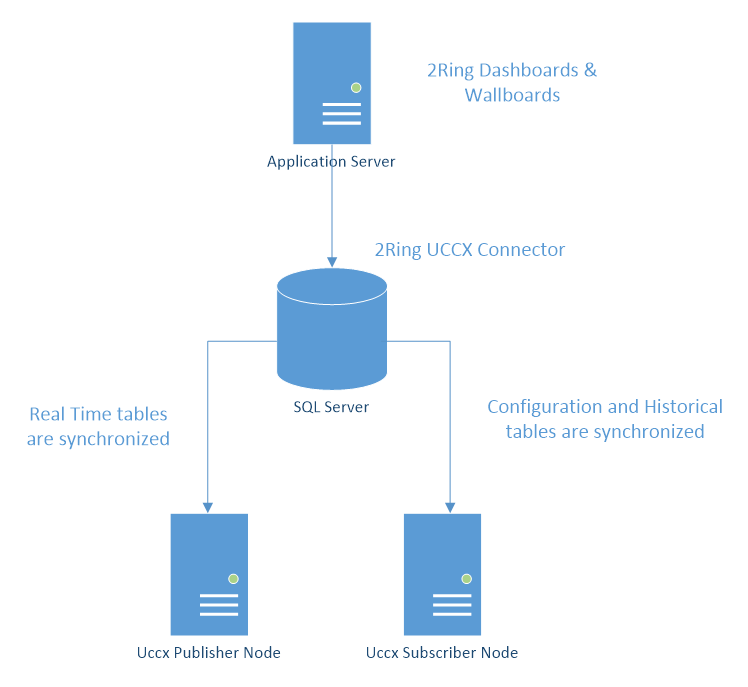
What is synchronized from Publisher Node?
All so-called real time data are synchronized from the UCCX publisher. The main table used in the synchronization process is RtCSQsSummary, which contains periodically refreshed snapshots of real-time information such as Calls in Queue, Longest Waiting Call, Agents logged in, Agents available, Agents Talking, etc. These data are updated in regular intervals.
What is synchronized from Subscriber Node?
All configuration and historical tables are synchronized from UCCX subscriber. There are many tables used in the synchronization process. These include tables such as ContactCallDetail, ContactQueueDetail, Resources, etc.
What user is used to synchronize UCCX data?
For the 2Ring UCCX connector to have access UCCX data, the uccxhruser is used. This is the only user from Cisco that provides access to both the real time and historical data. The uccxwallboard and uccxworkforce users can’t be used since they only provide access to real time data and limited configuration data.
For more information on the UCCX users, please use this link.
How does the 2Ring UCCX connector synchronization process affect UCCX performance?
The UCCX connector synchronizes most of the data (99%) from the secondary node. This ensures that additional CPU load is not placed on the UCCX publisher so that it does not affect the performance of the UCCX server and cause disruptions for agents. Real time data is only synchronized from publisher since this data is not available on the subscriber.
How long does the synchronization of data from UCCX and calculation of data take place?
The process consists of the following actions:
Synchronize data from UCCX
Post process collected data
Calculate KPI and Grid values
Wait 1 second
The time duration of the above cycle depends on a few factors. Generally, within 5 seconds this process is complete, but may take longer depending on the network connection between SQL server and UCCX, server hardware used for SQL server, and response time of the query on UCCX if the tables are quite large.