
Okta Authentication
Users configured in the Okta app can be used to access the DW application.
In order to Import users from Okta, these two Okta applications need to be created:
2Ring DW - Auth
2Ring DW - User Import
2Ring DW - Auth
Create Okta application
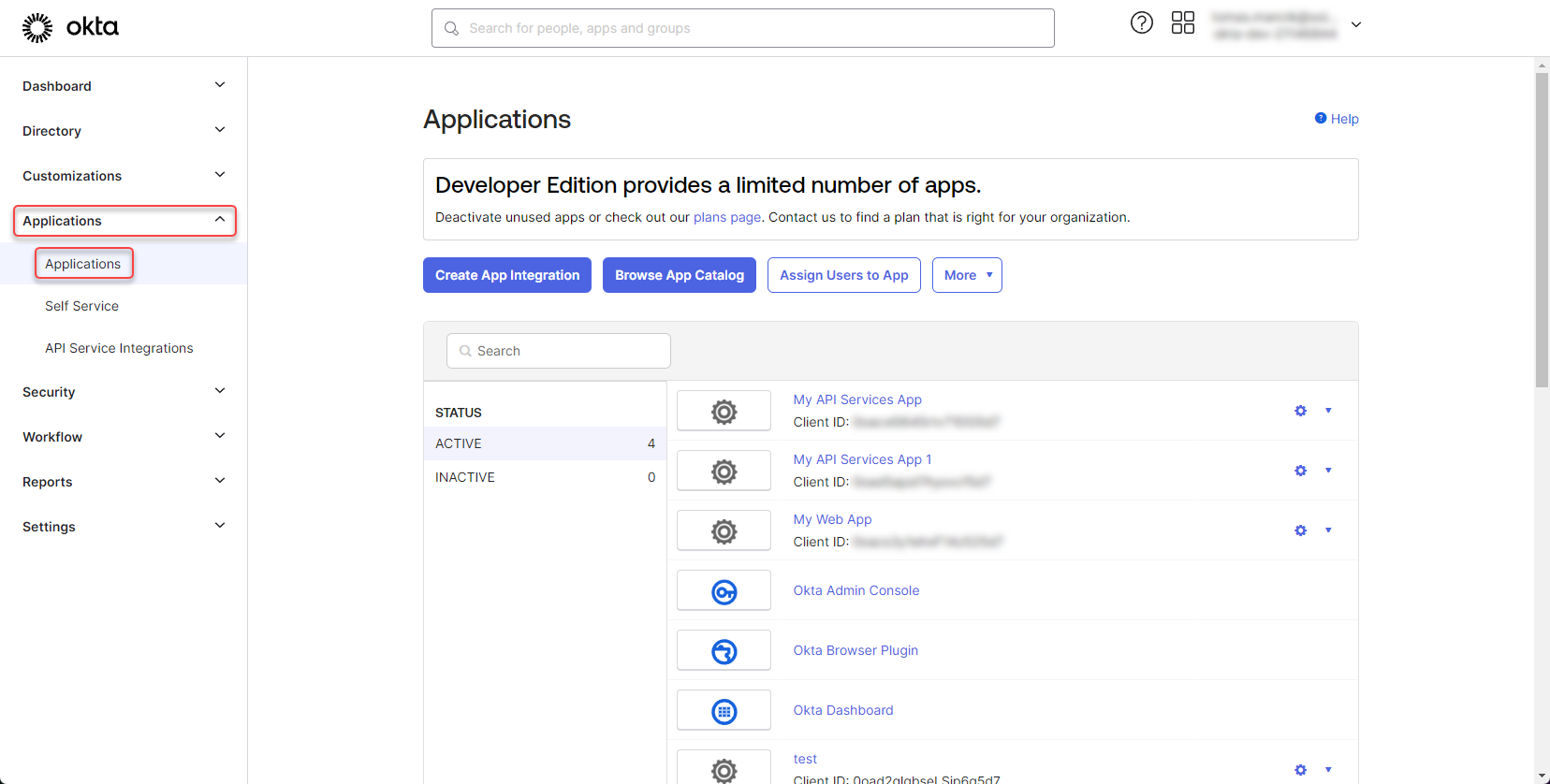
Login to your Okta account -> Applications -> Applications
Figure 1: Create Okta application
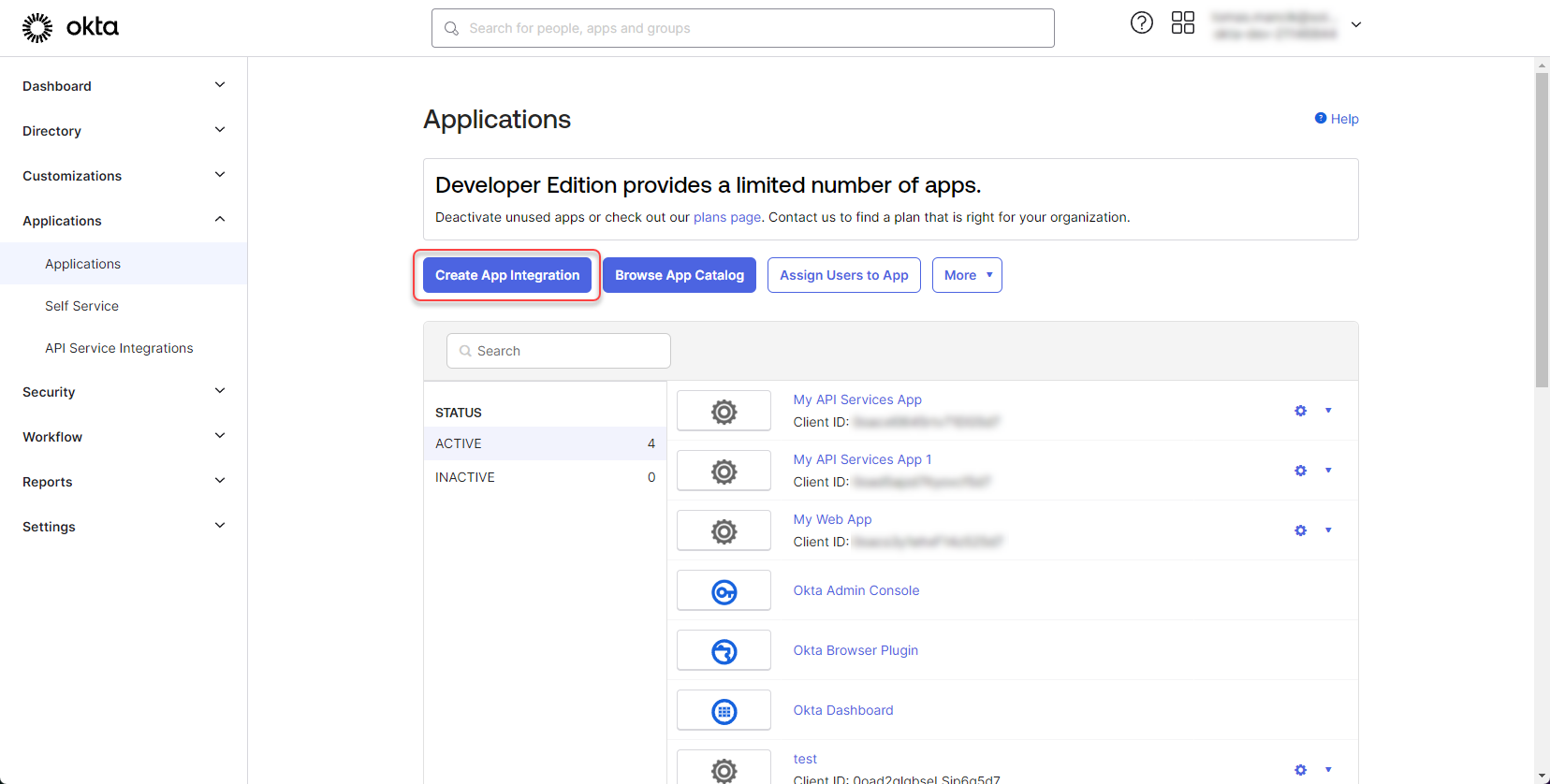
Click on “Create App Integration”
Figure 2: Create Okta application 2
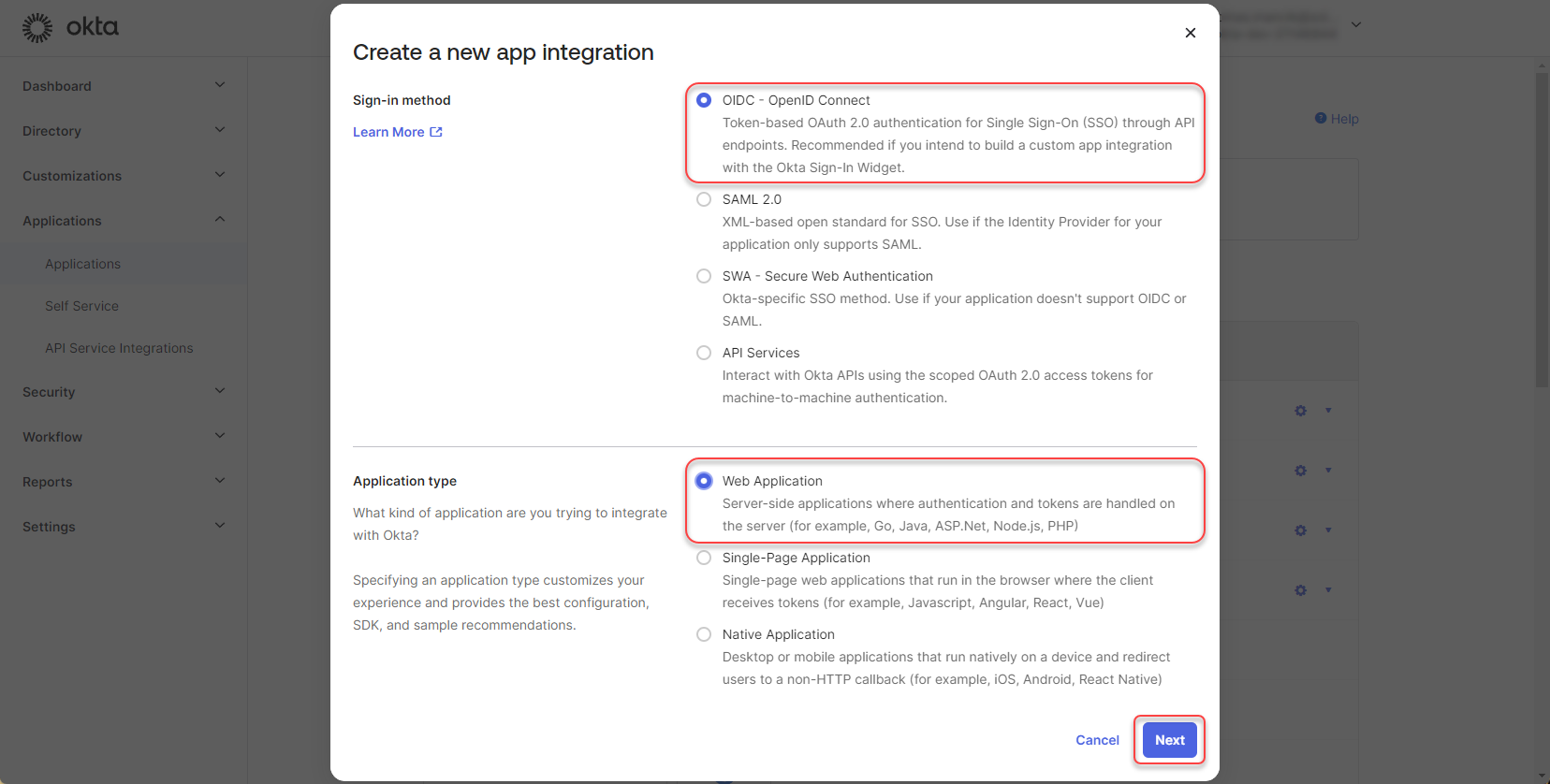
Select OIDC - OpenID Connect -> Web Application and click “Next”
Figure 3: Create Okta application 3
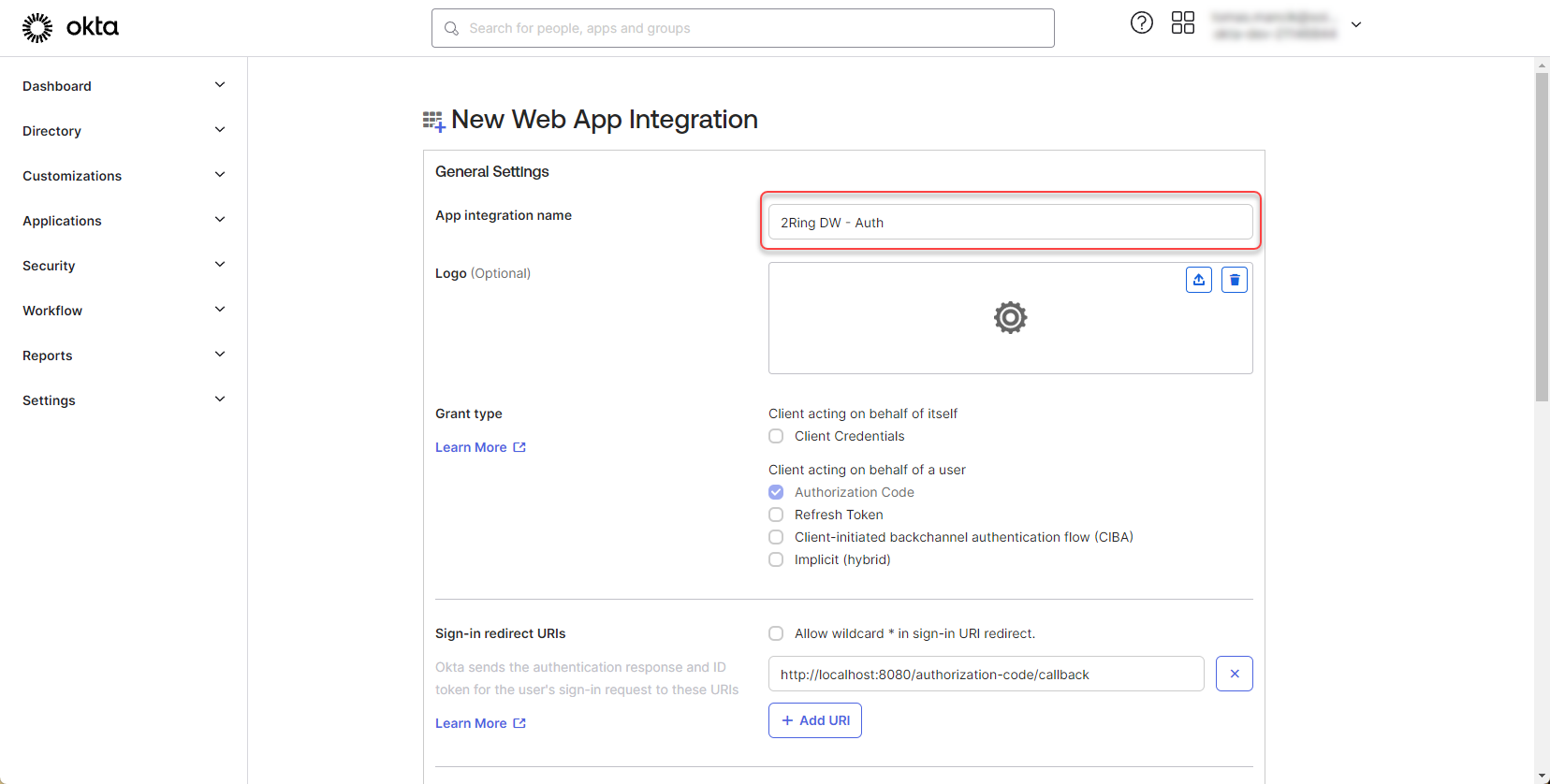
Fill the App integration name.
Figure 4: Create Okta application 4
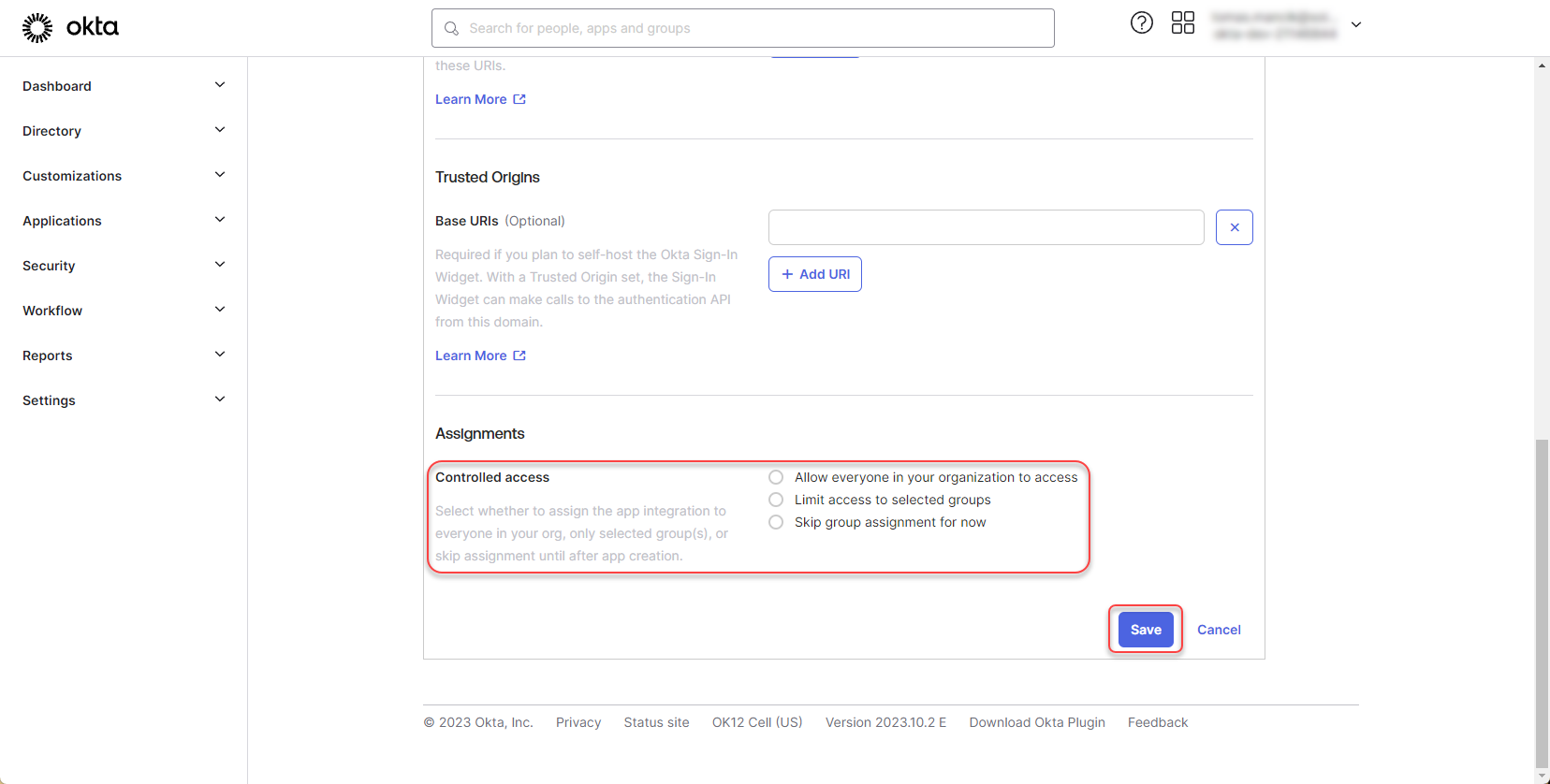
Scroll down to “Controlled access” section and define, who should have access to the app integration. Click “Save”
Figure 5: Create Okta application 5
Configure Okta application
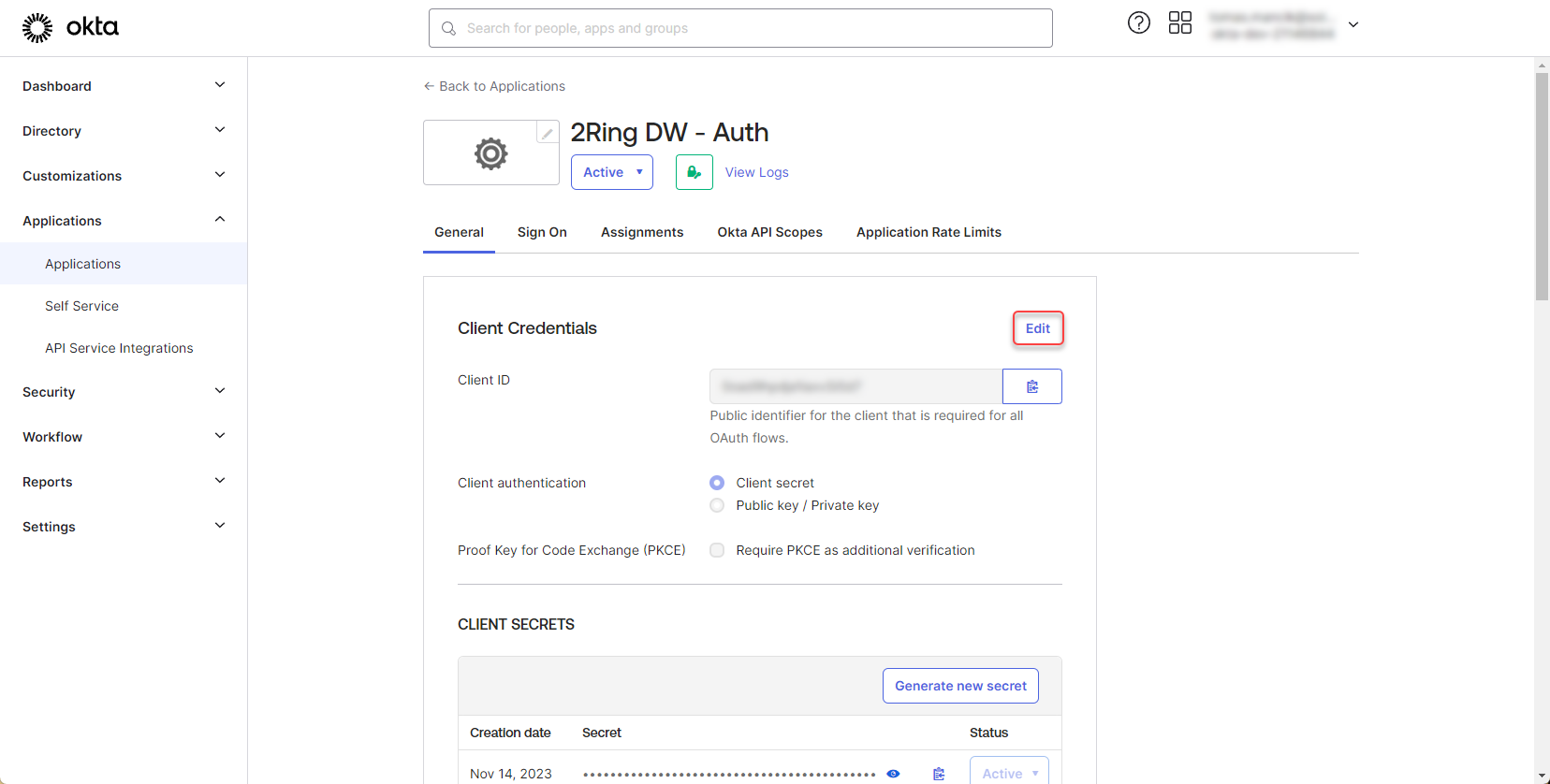
Go to Okta application page and click “Edit” in the “Client Credentials” section
Figure 6: Configure Okta application
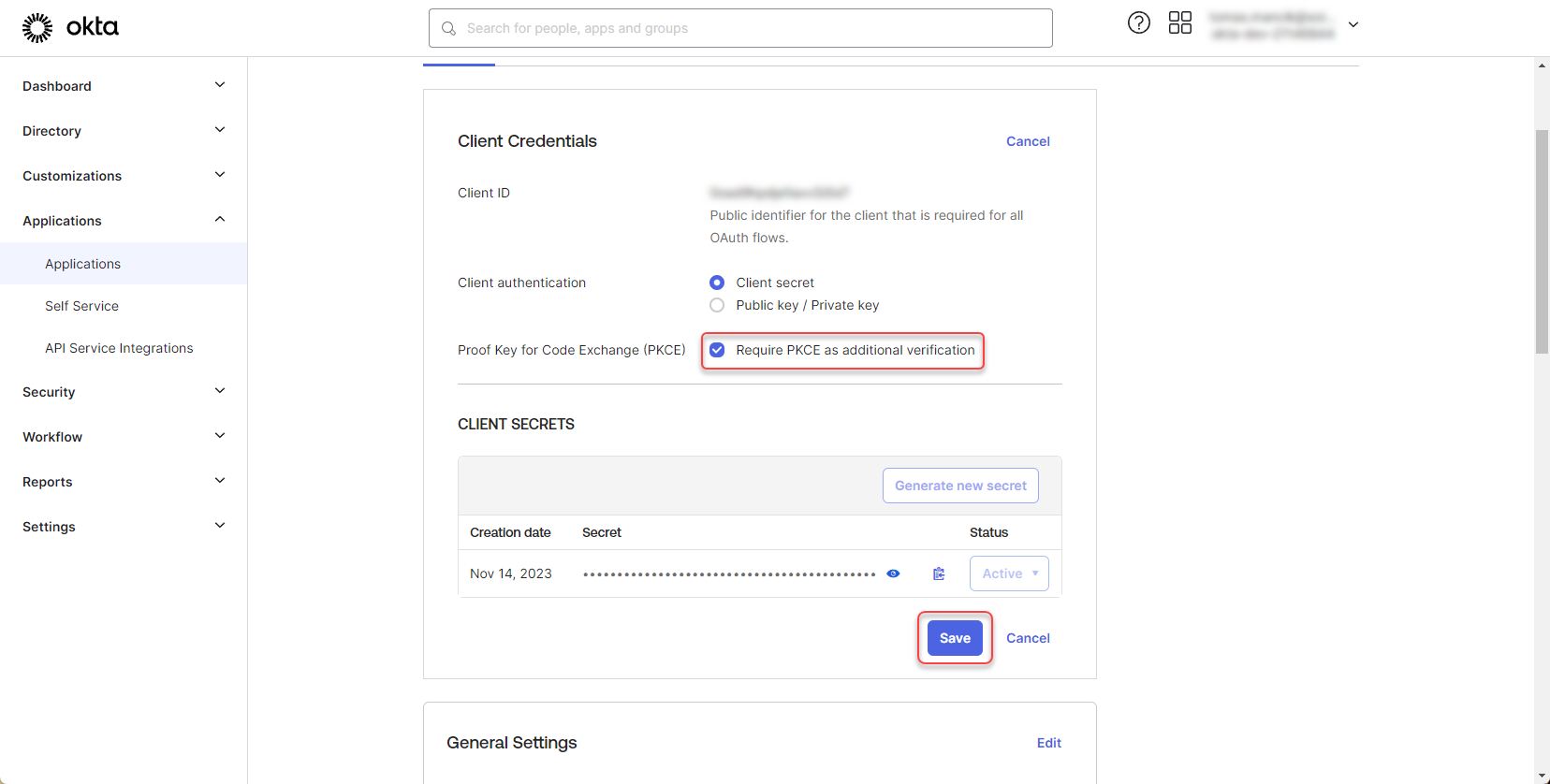
Check the “Require PKCE as additional verification” option and click “Save”
Figure 7: Configure Okta application 2
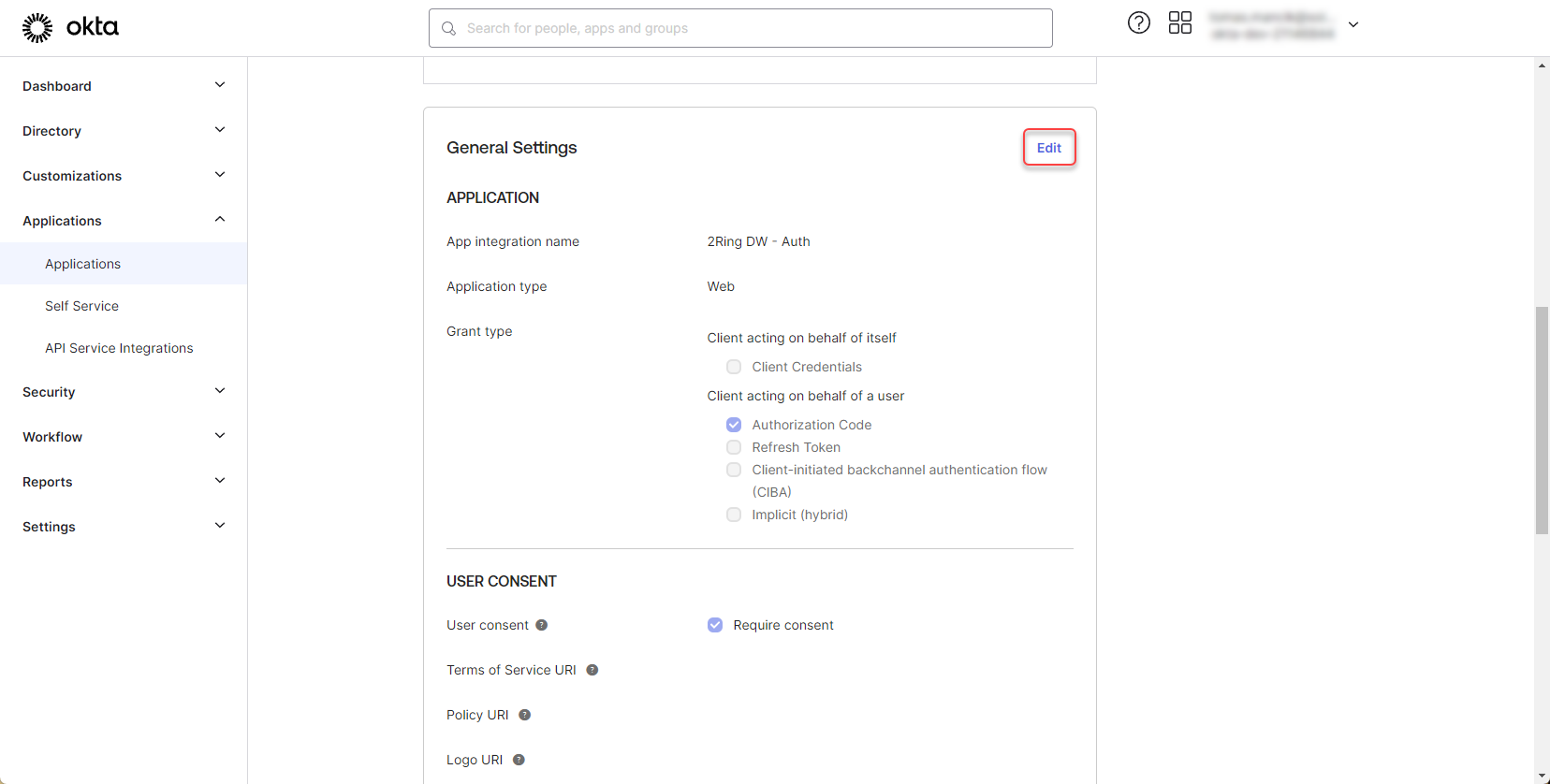
Click “Edit” in the “General Settings” section
Figure 8: Configure Okta application 3
Scroll down to the “Login” section and remove default “Sign-in and Sign-out redirect URI”
Figure 9: Configure Okta application 4
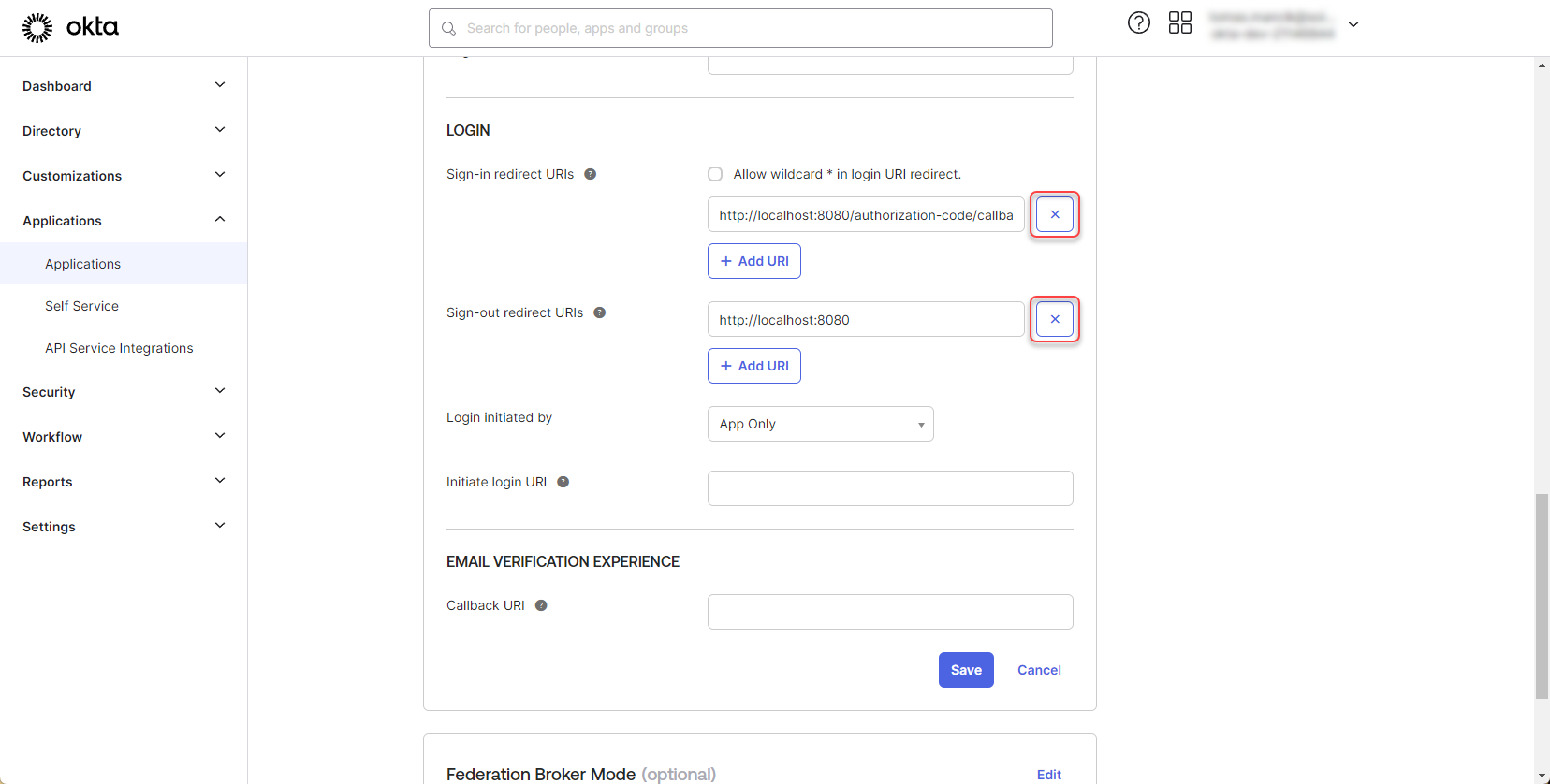
Contact 2Ring support to obtain the “Sign-in redirect URI” and add it to the application:
Figure 10: Configure Okta application 5
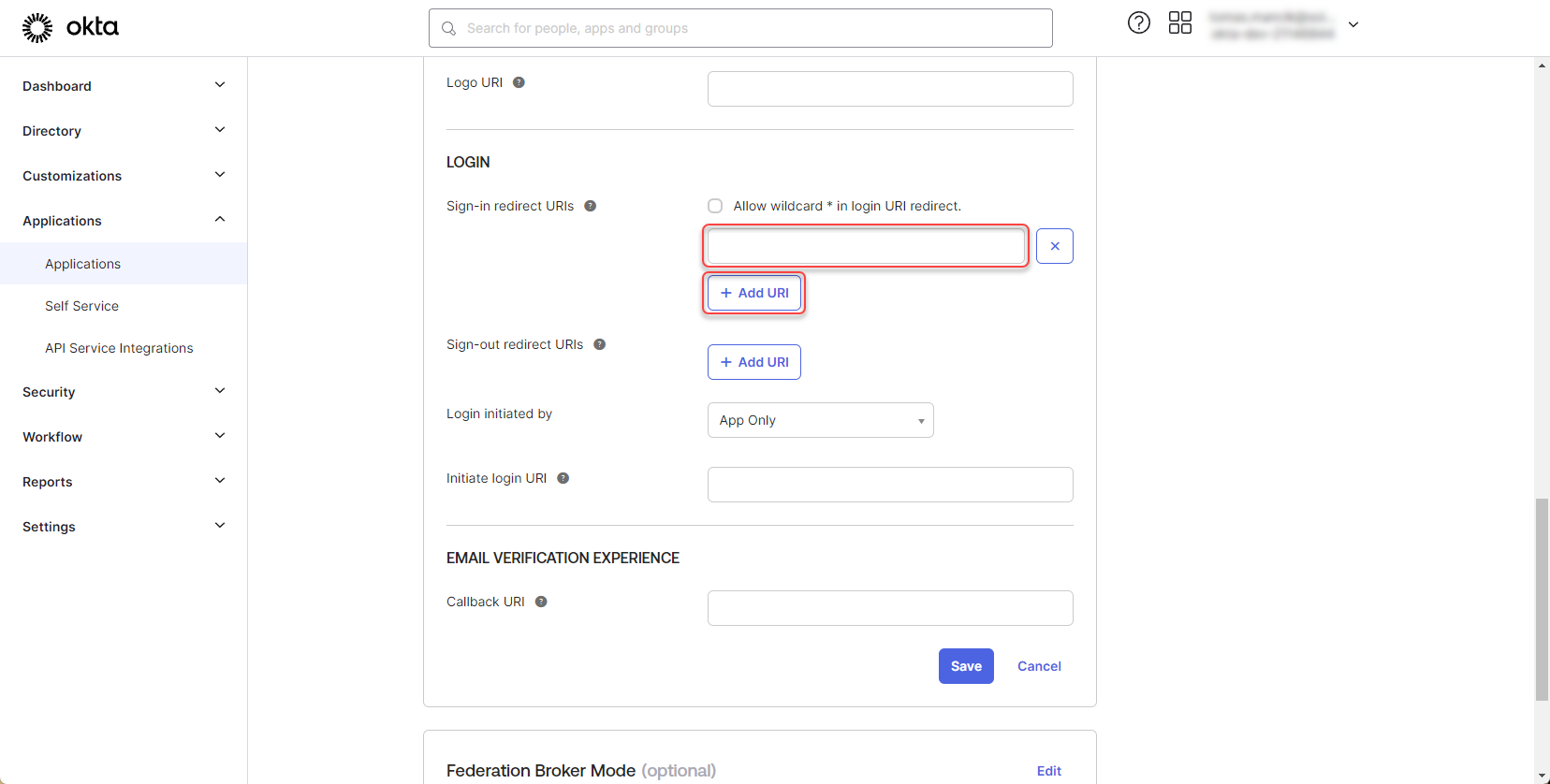
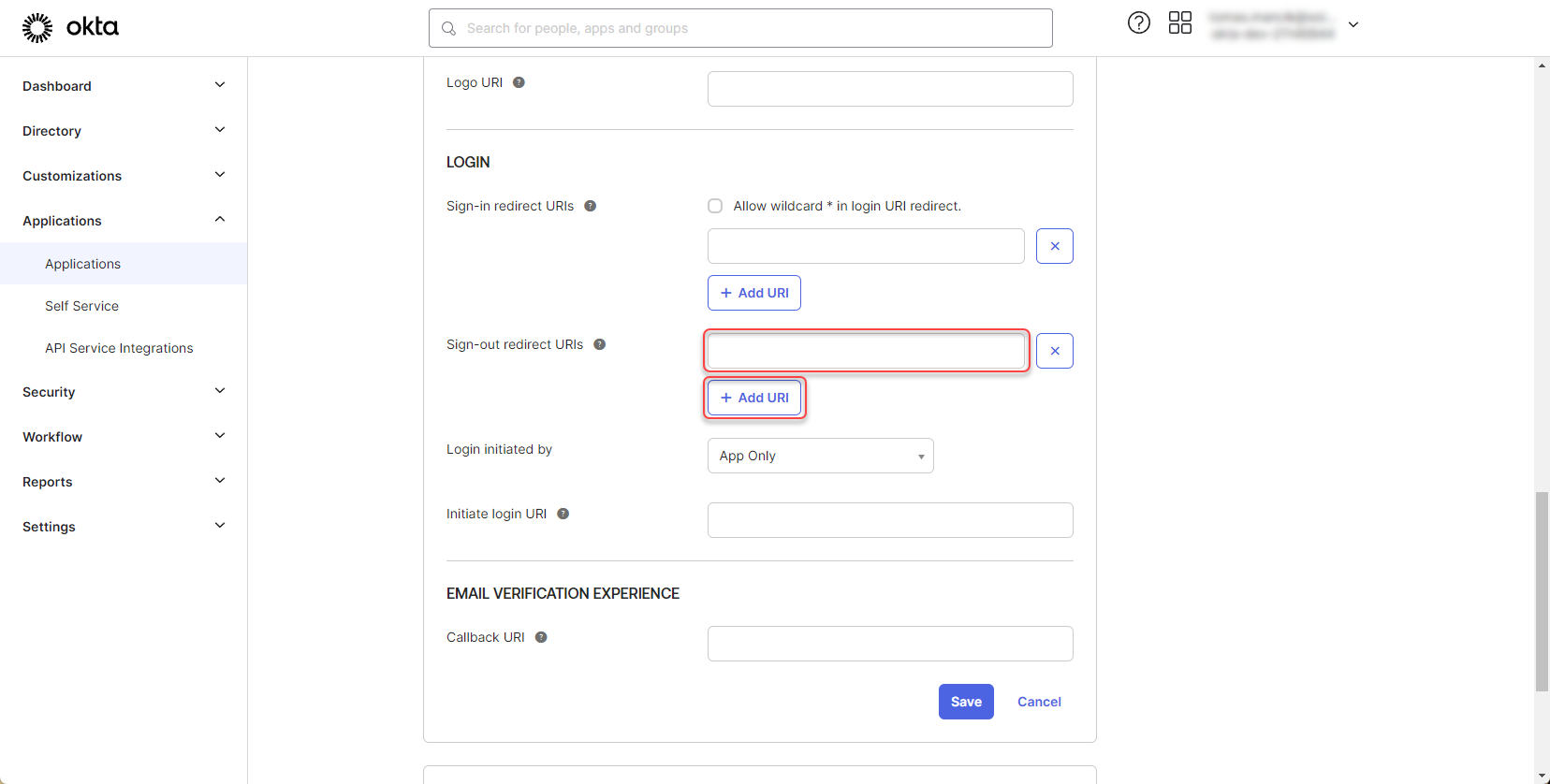
Contact 2Ring support to obtain the “Sign-out redirect URI” and add it to the application:
Figure 11: Configure Okta application 6
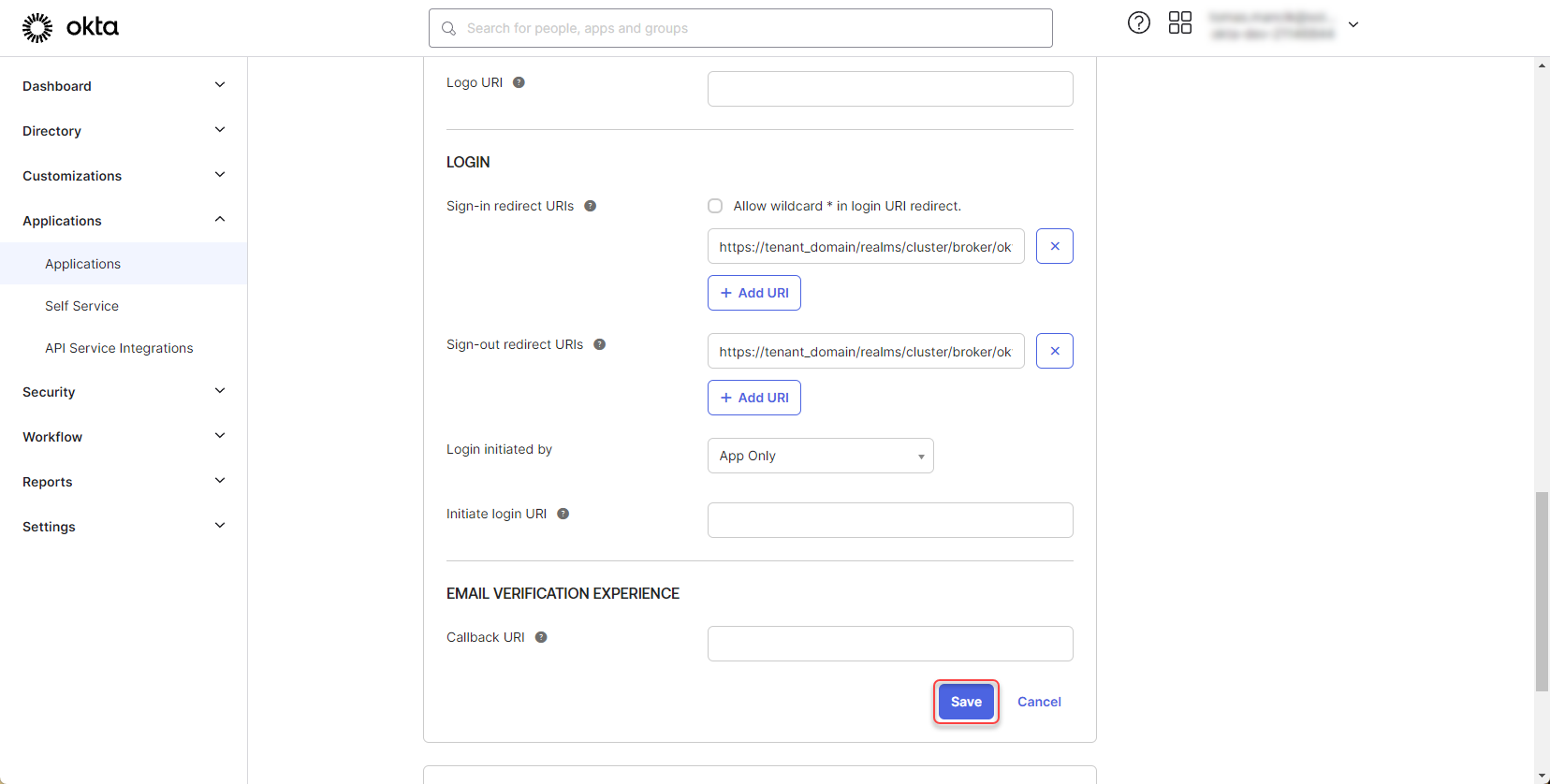
Click “Save”
Figure 12: Configure Okta application 7
Configure Okta policy
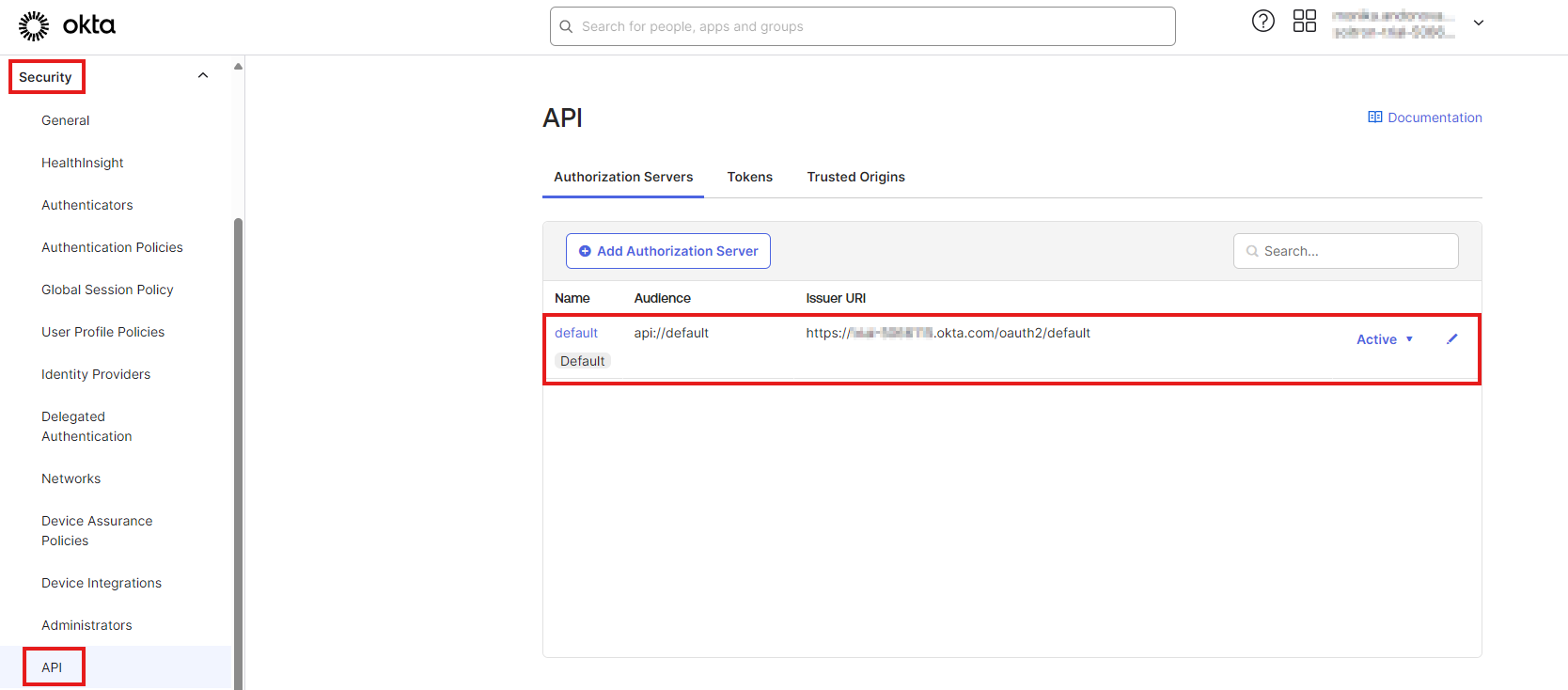
Navigate to Security -> API -> Authorization Servers and click on the “default” server.
Figure 13: Configure Okta policy
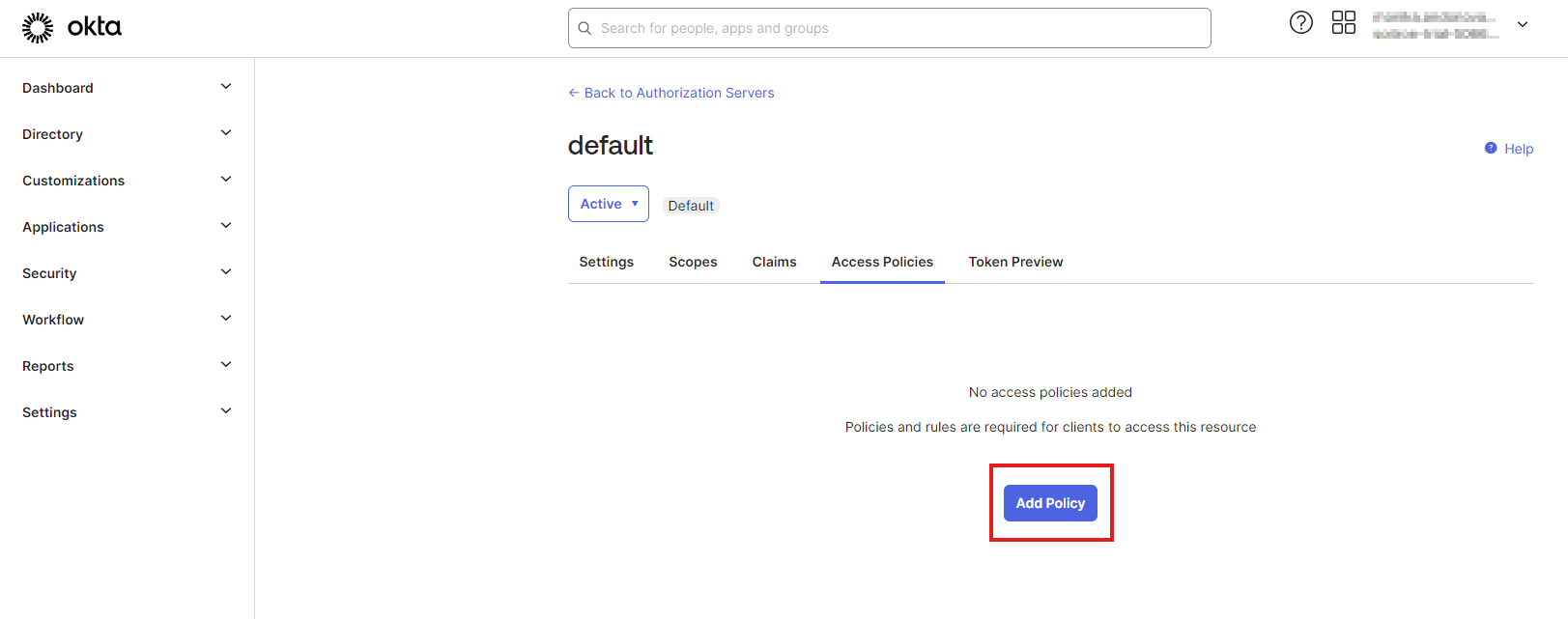
Switch to the “Access Policy” tab and click “Add Policy”.
Figure 14: Configure Okta policy 2
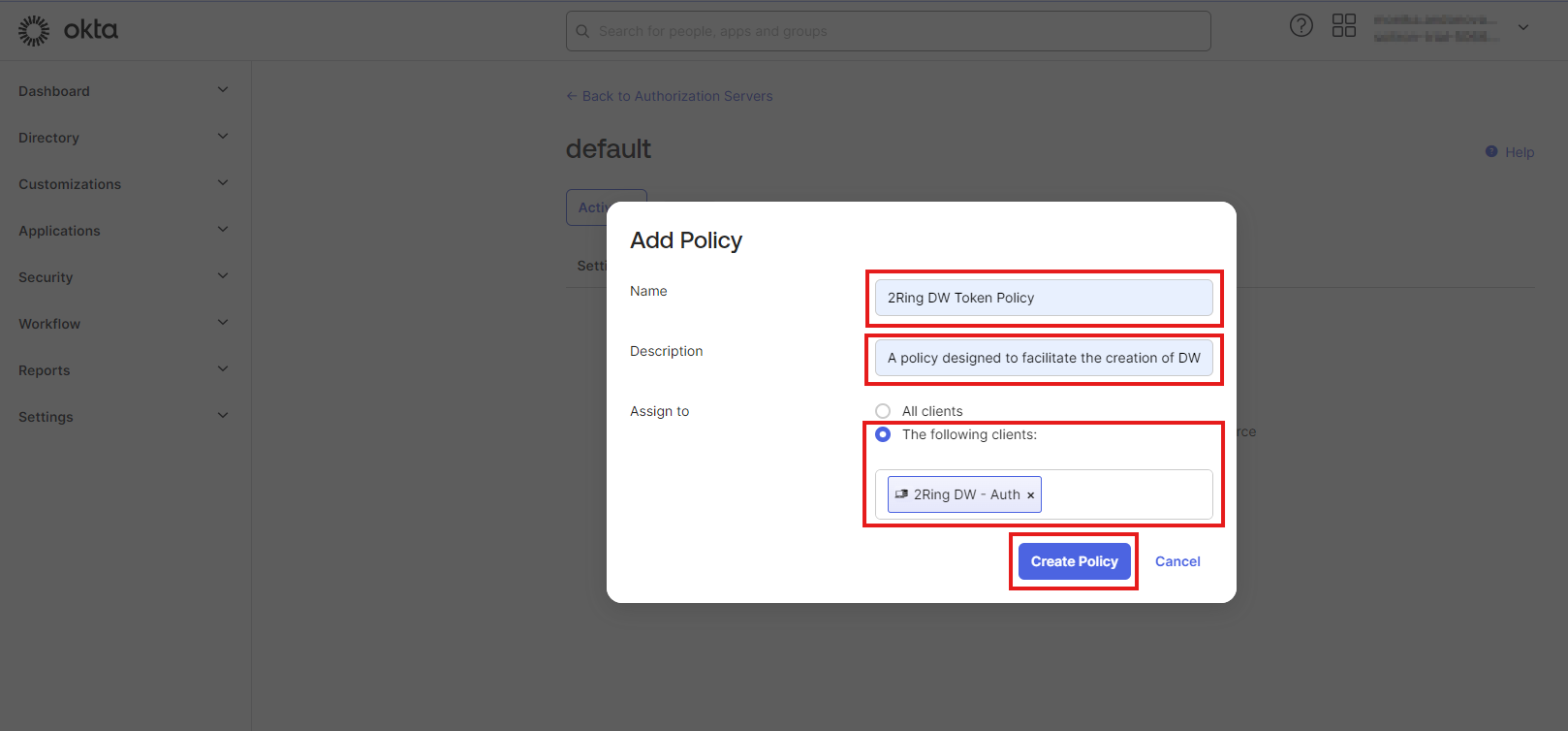
Fill the “Name” and “Description” for the policy. In the “Assign to” section, choose “The following clients” option and search for “2Ring DW - Auth” application. Click “Create Policy”.
Figure 15: Configure Okta policy 3
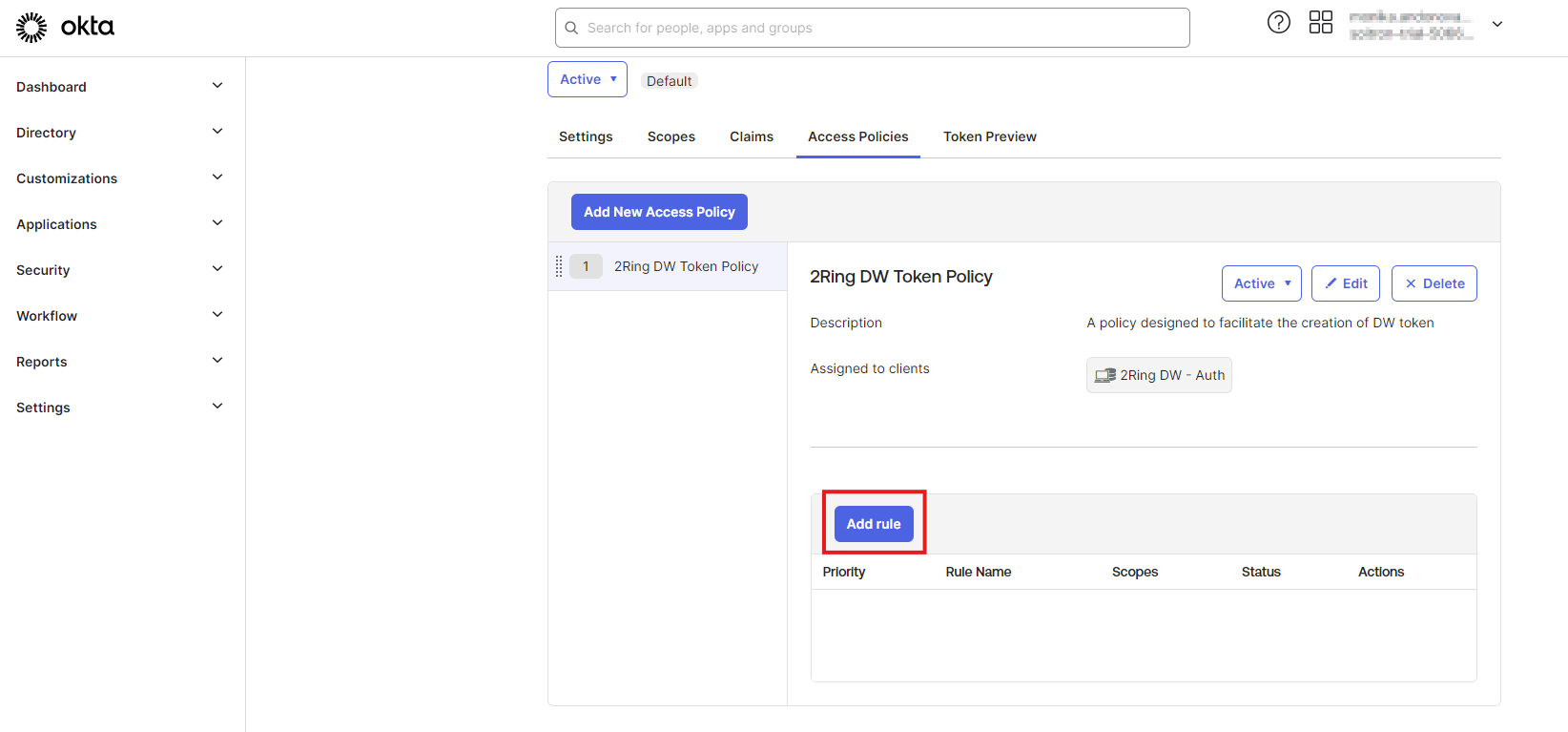
Click on “Add rule” button.
Figure 16: Configure Okta policy 4
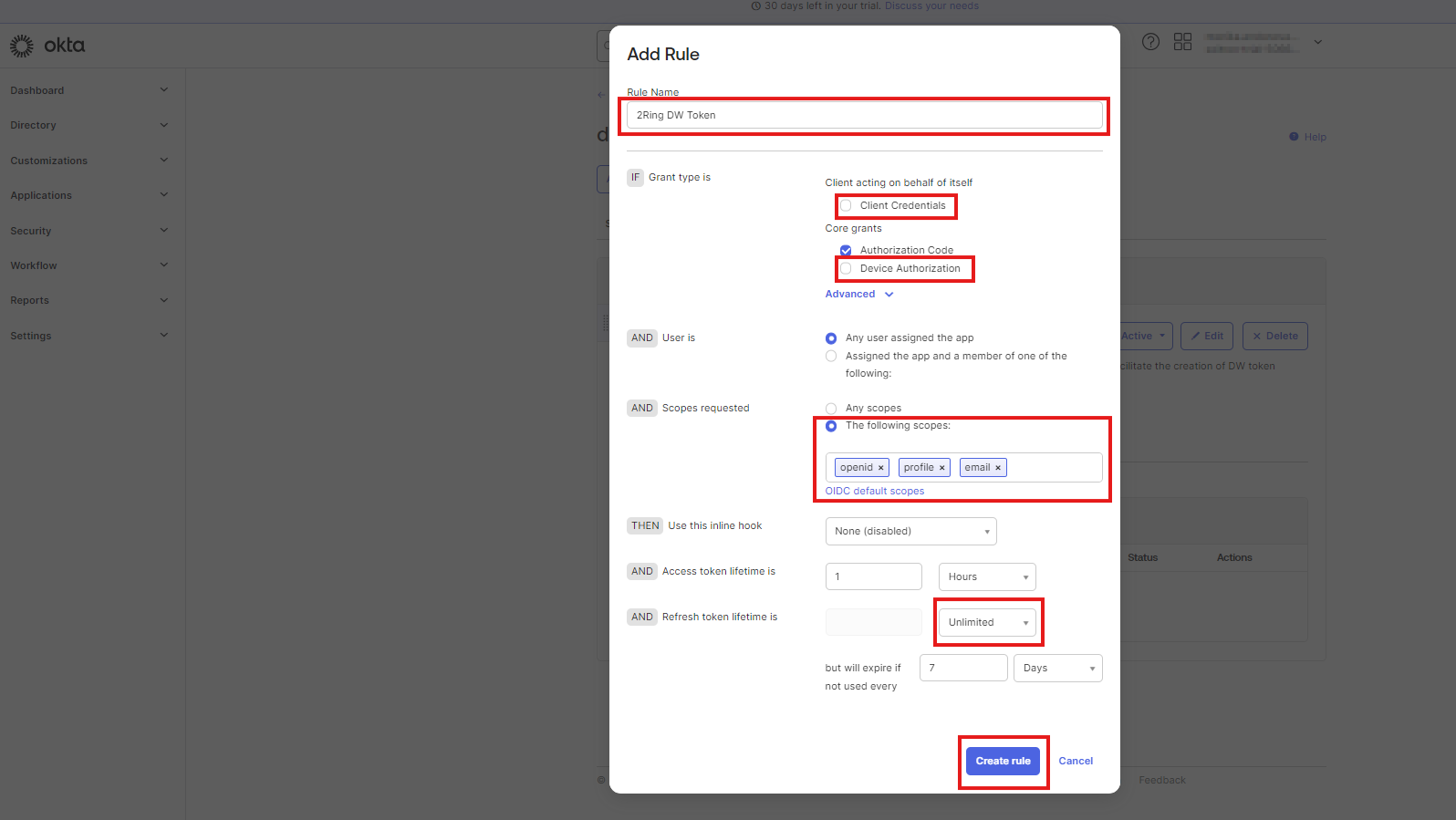
Fill the “Rule Name”. In the first “Grant type is” section uncheck the “Client Credentials” and “Device Authorization” checkboxes. In “Scopes requested” section select “The following scopes” option and add “openid”, “profile” and “email” scopes. Change “Refresh token lifetime” to “Unlimited.” Click “Create Rule”.
Figure 17: Configure Okta policy 5
2Ring DW - User Import
Create Okta application
Login to your Okta account -> Applications -> Applications
Figure 18: Create Okta application
Click on “Create App Integration”
Figure 19: Create Okta application 2
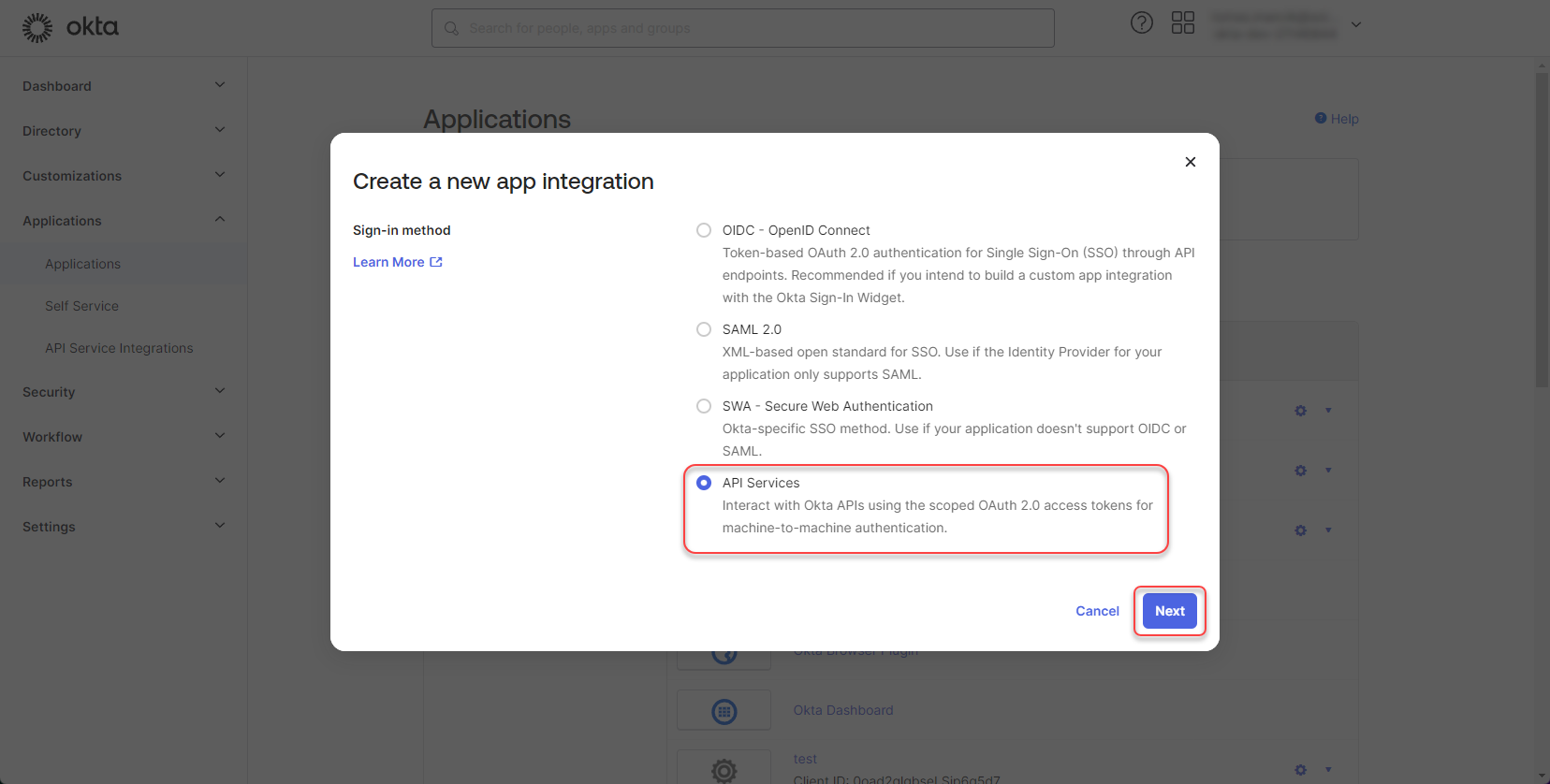
Select the “API Services” and click “Next”
Figure 20: Create Okta application 3
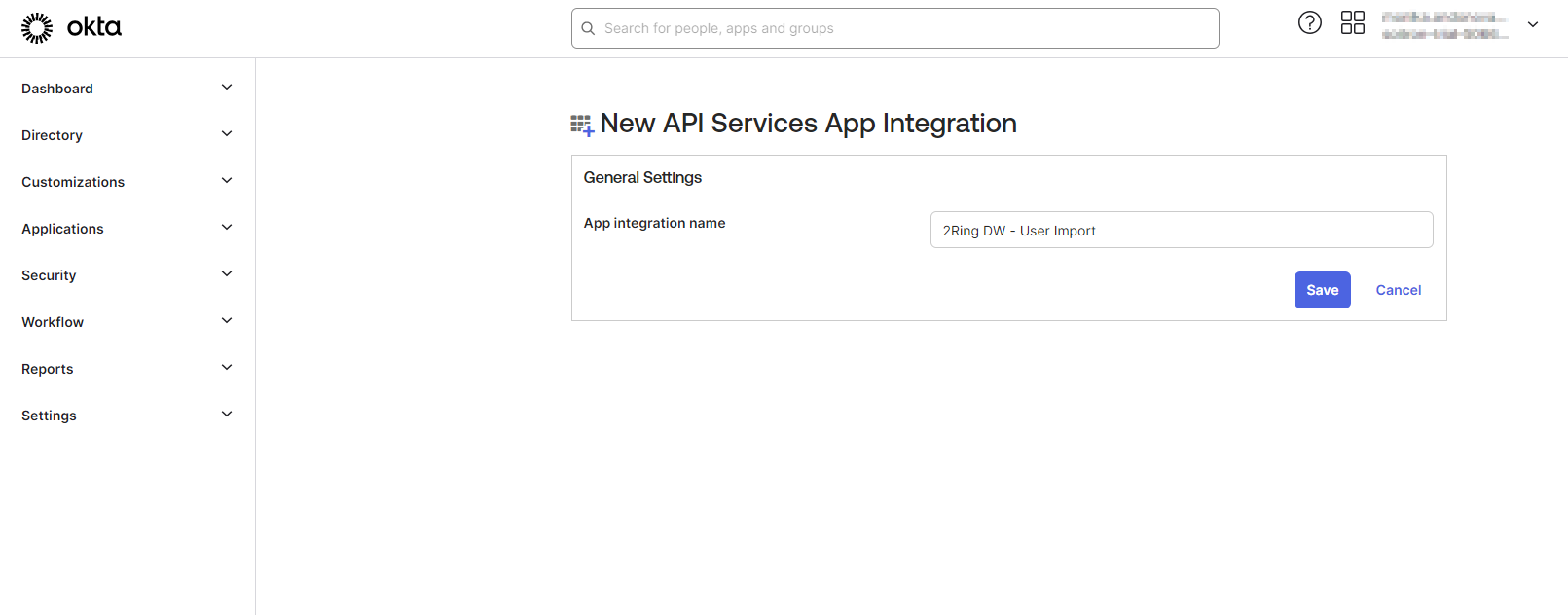
Fill the App integration name and click “Save”
Figure 21: Create Okta application 4
Configure Okta application
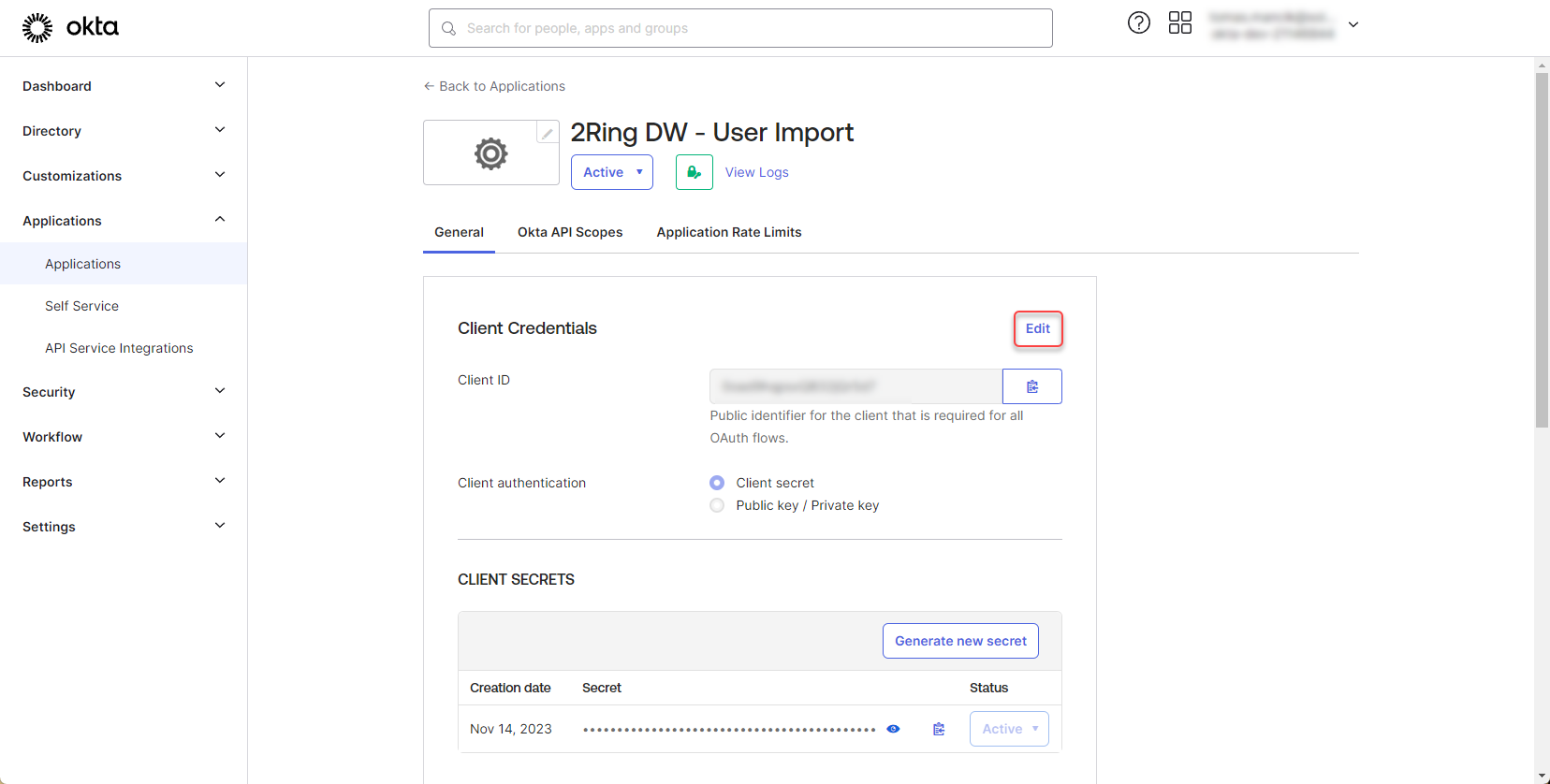
In the app details, in the Client Credentials section, click “Edit”
Figure 22: Configure Okta application
Select the “Public key / Private key” Client authorization
Figure 23: Configure Okta application 2
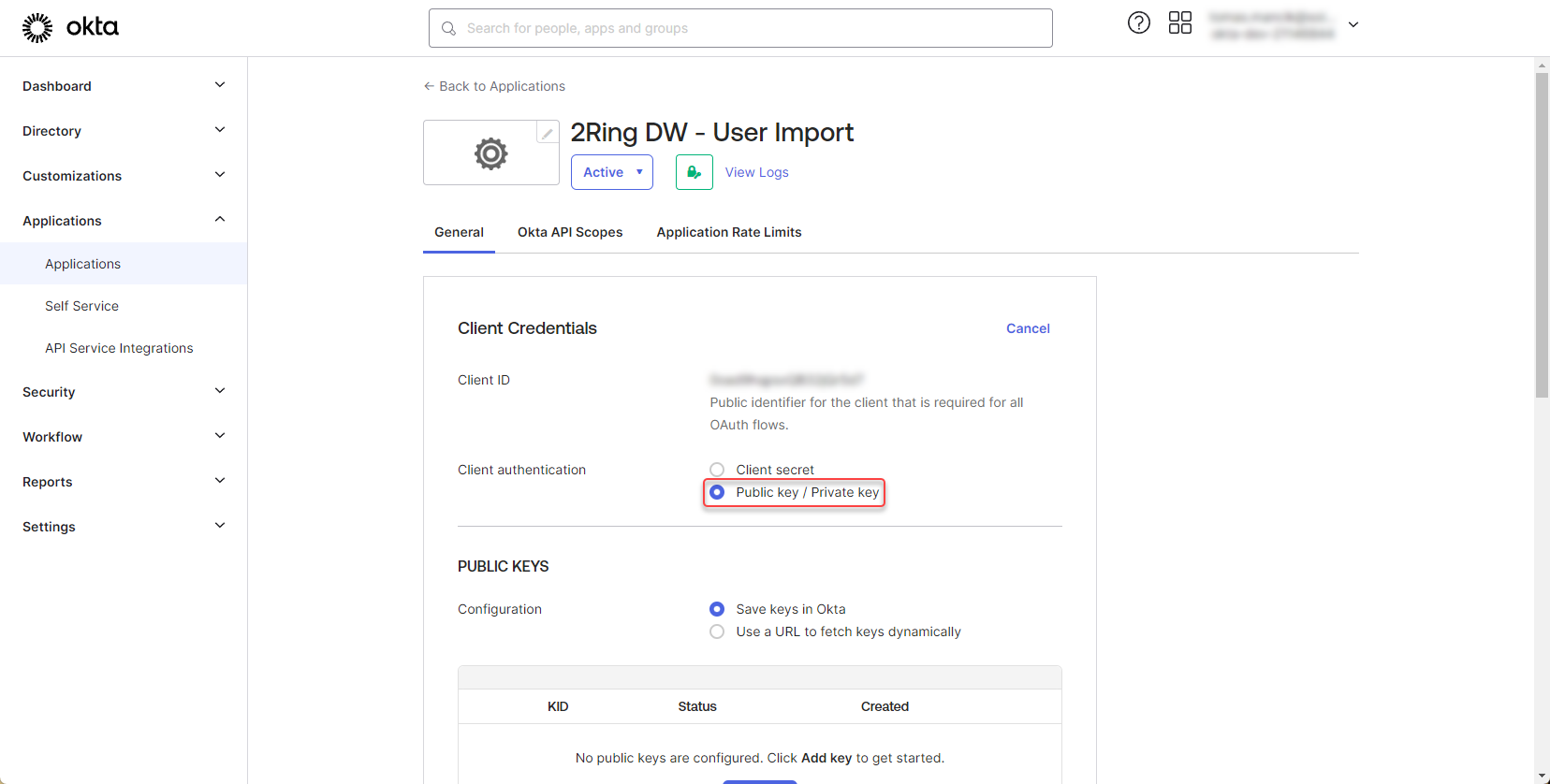
Click on “Add Key”
Figure 24: Configure Okta application 3
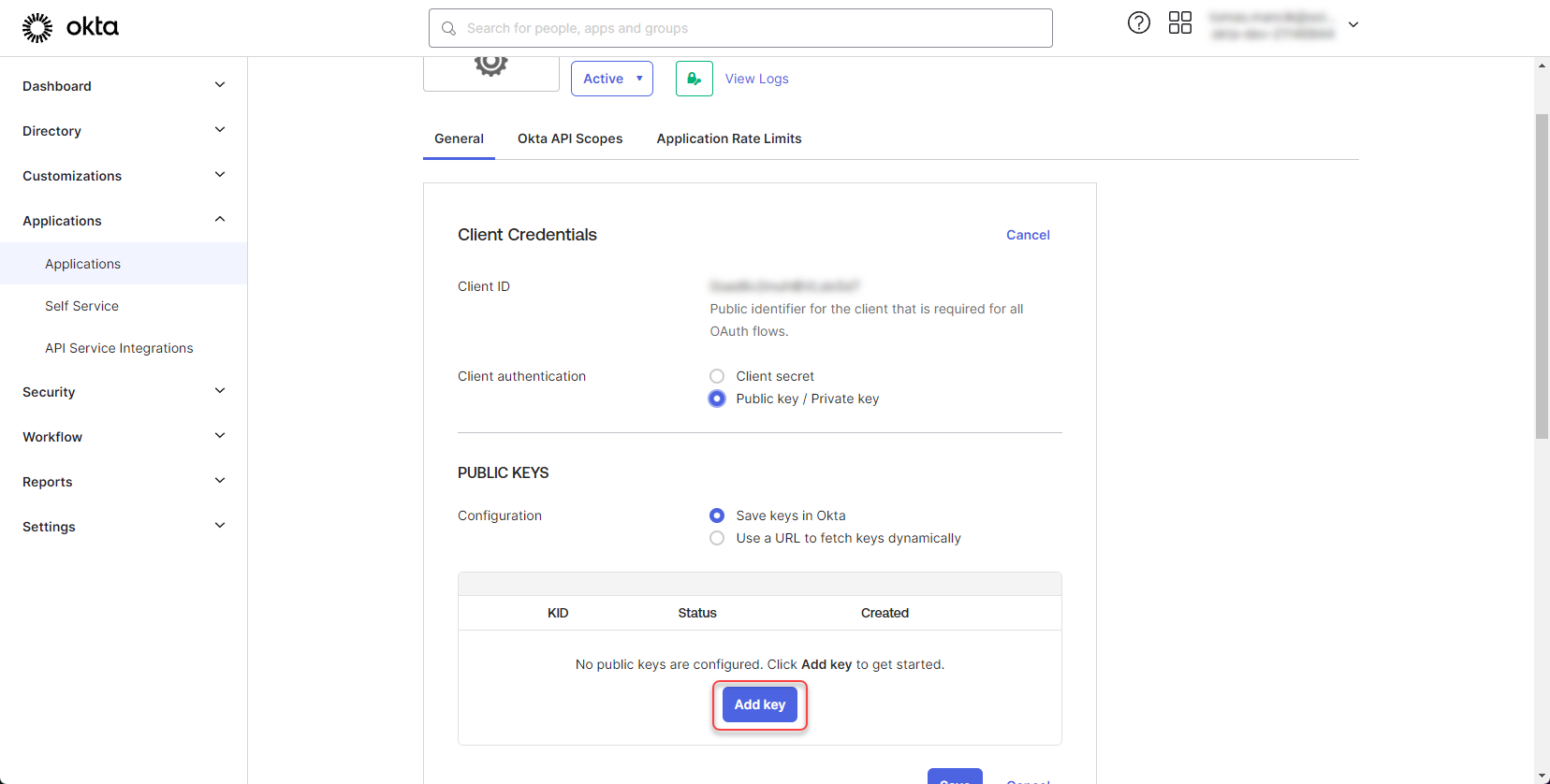
In the following dialog, click on “Generate new key”
Figure 25: Configure Okta application 4
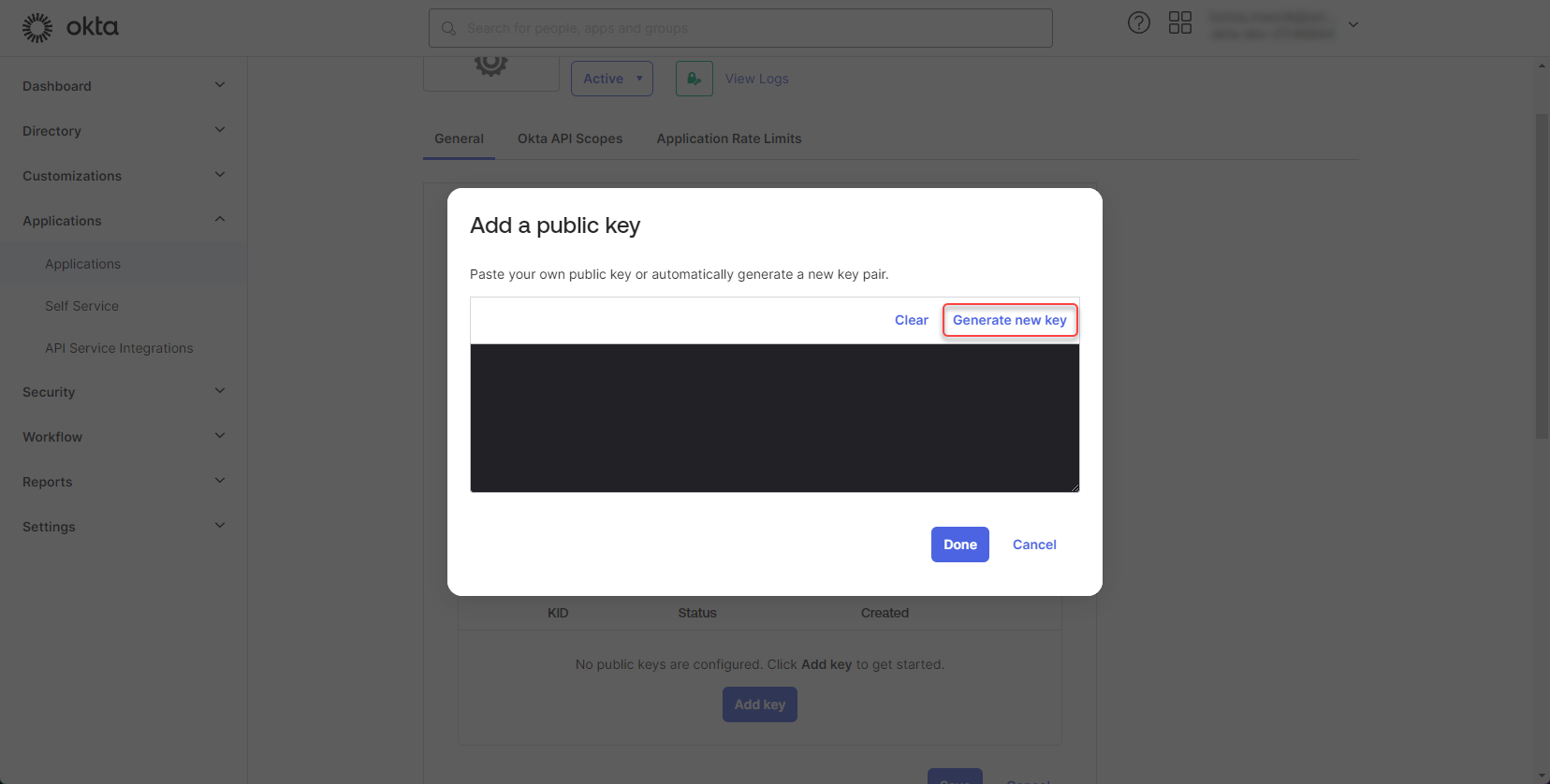
Switch the format of the private key to “PEM”, copy the value and click “Done”
Figure 26: Configure Okta application 5
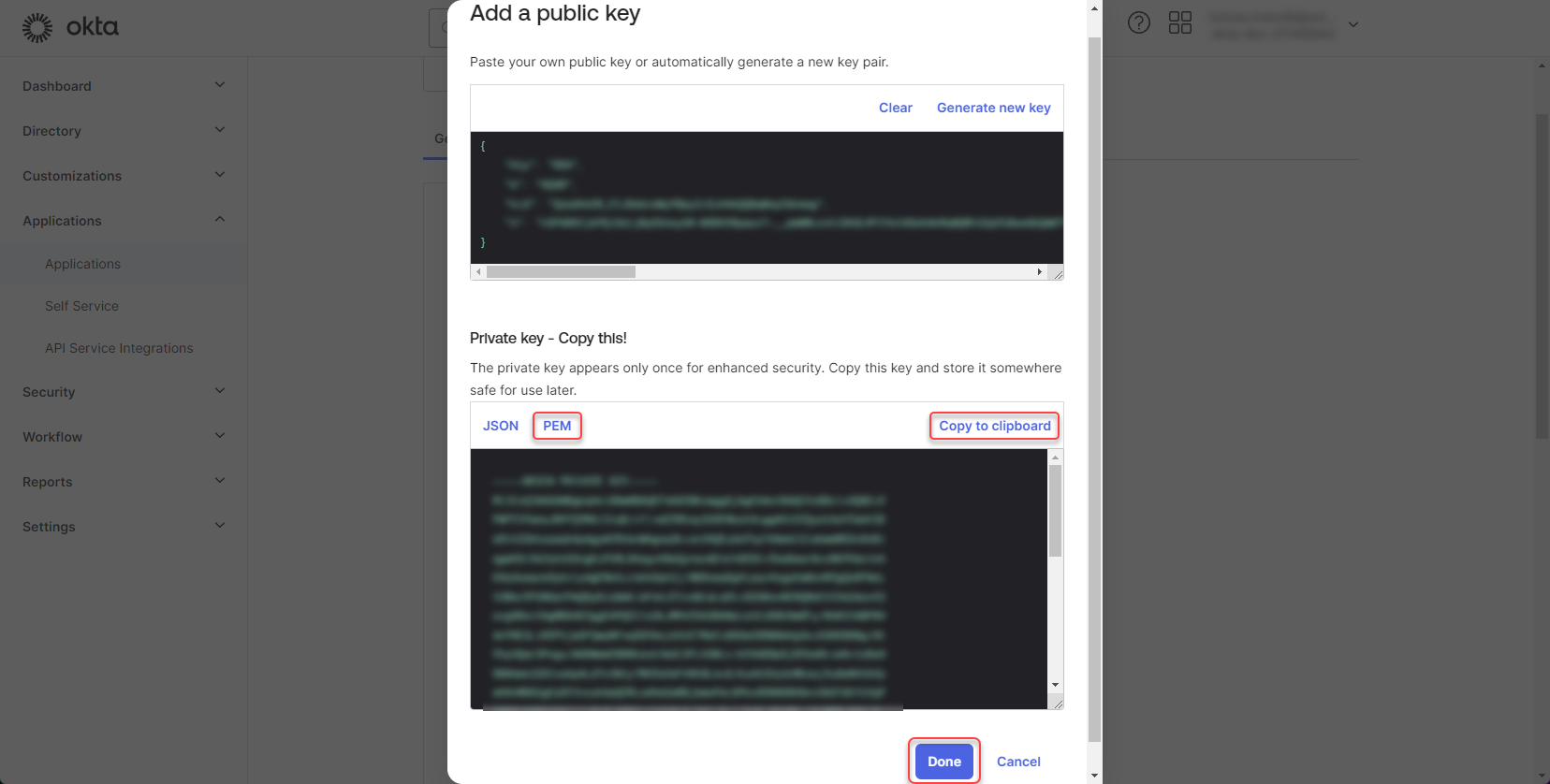
Click “Save”
Figure 27: Configure Okta application 6
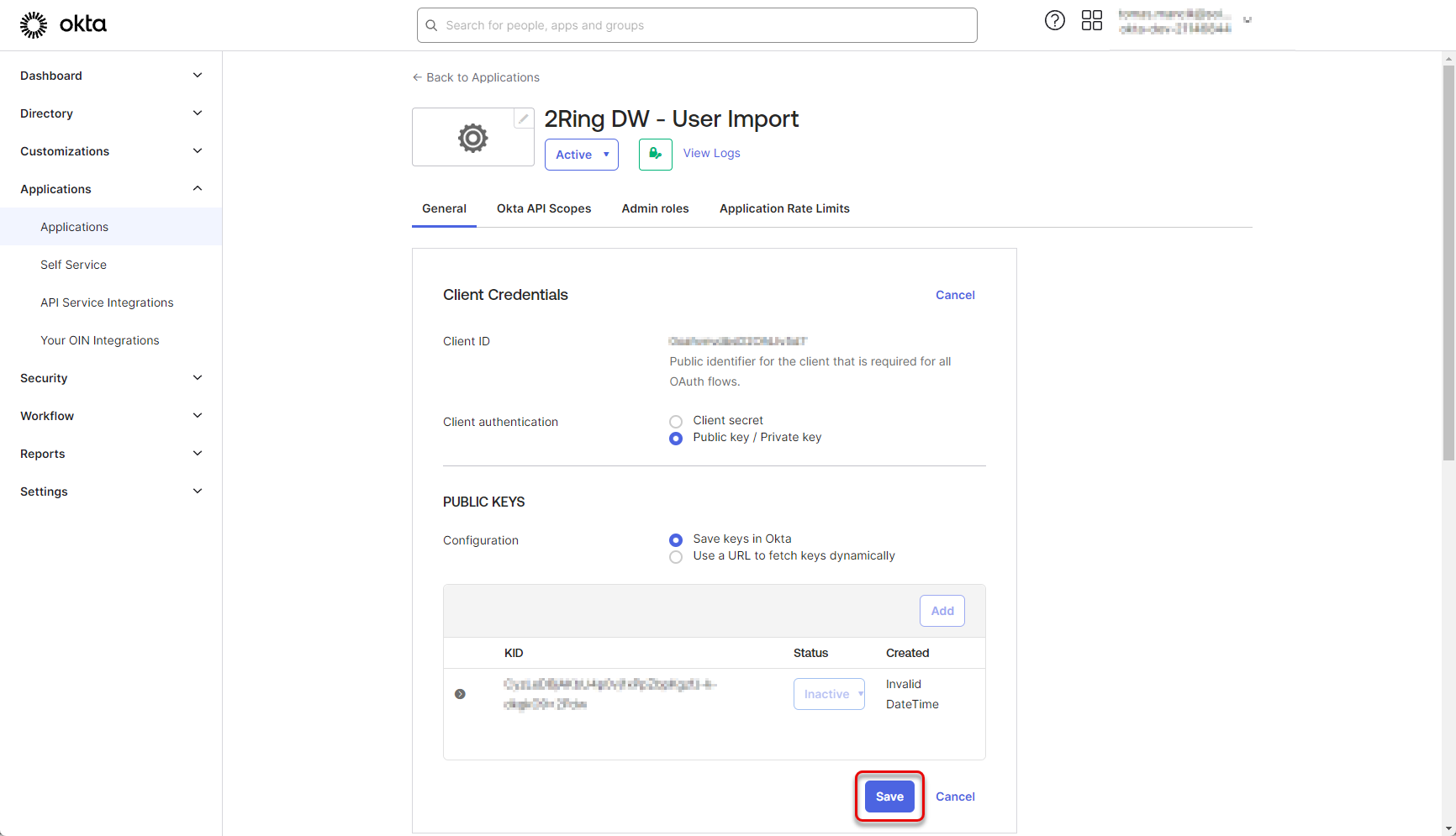
Confirm the Client authentication type by clicking “Save” again.
Figure 28: Configure Okta application 7
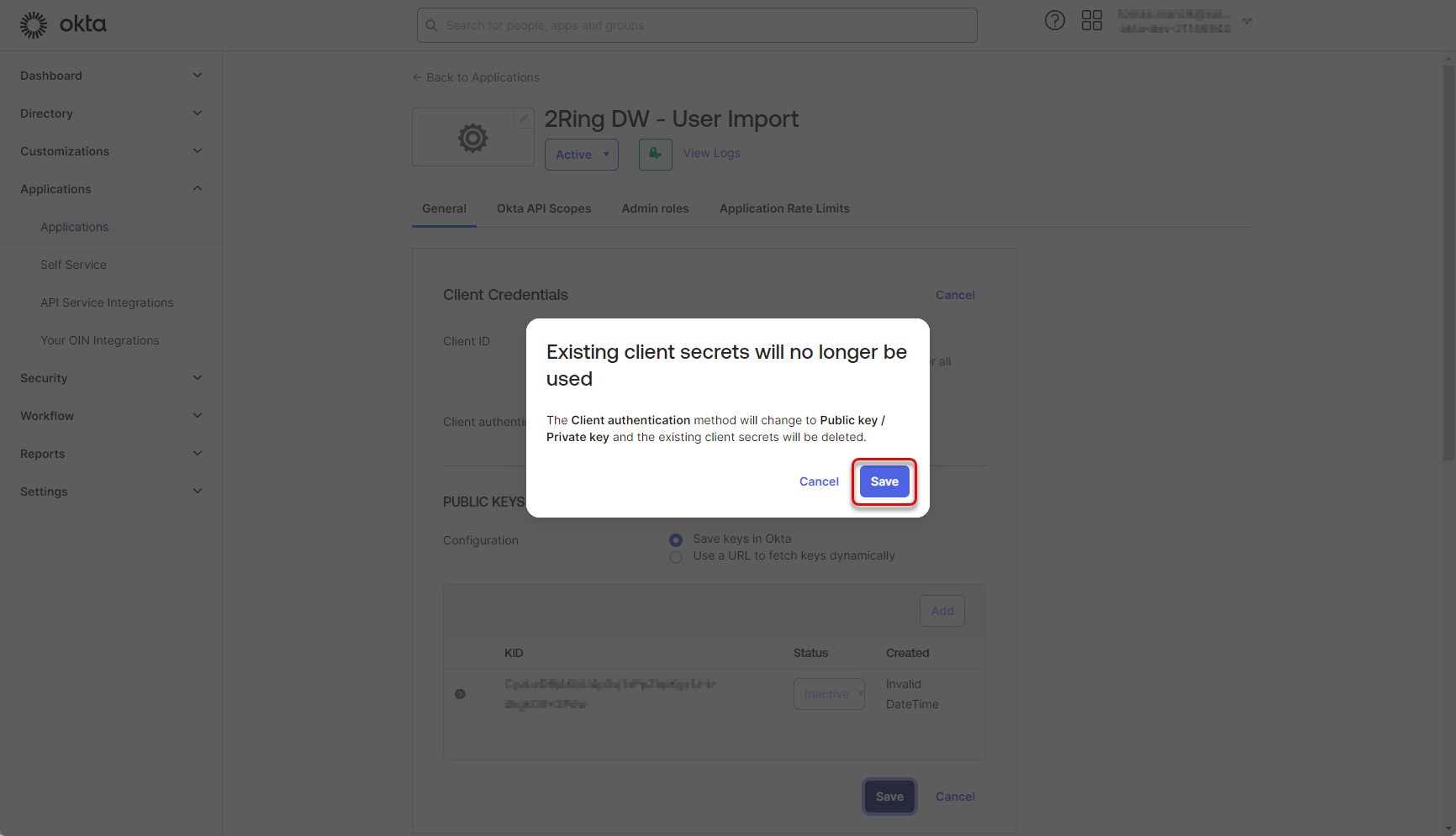
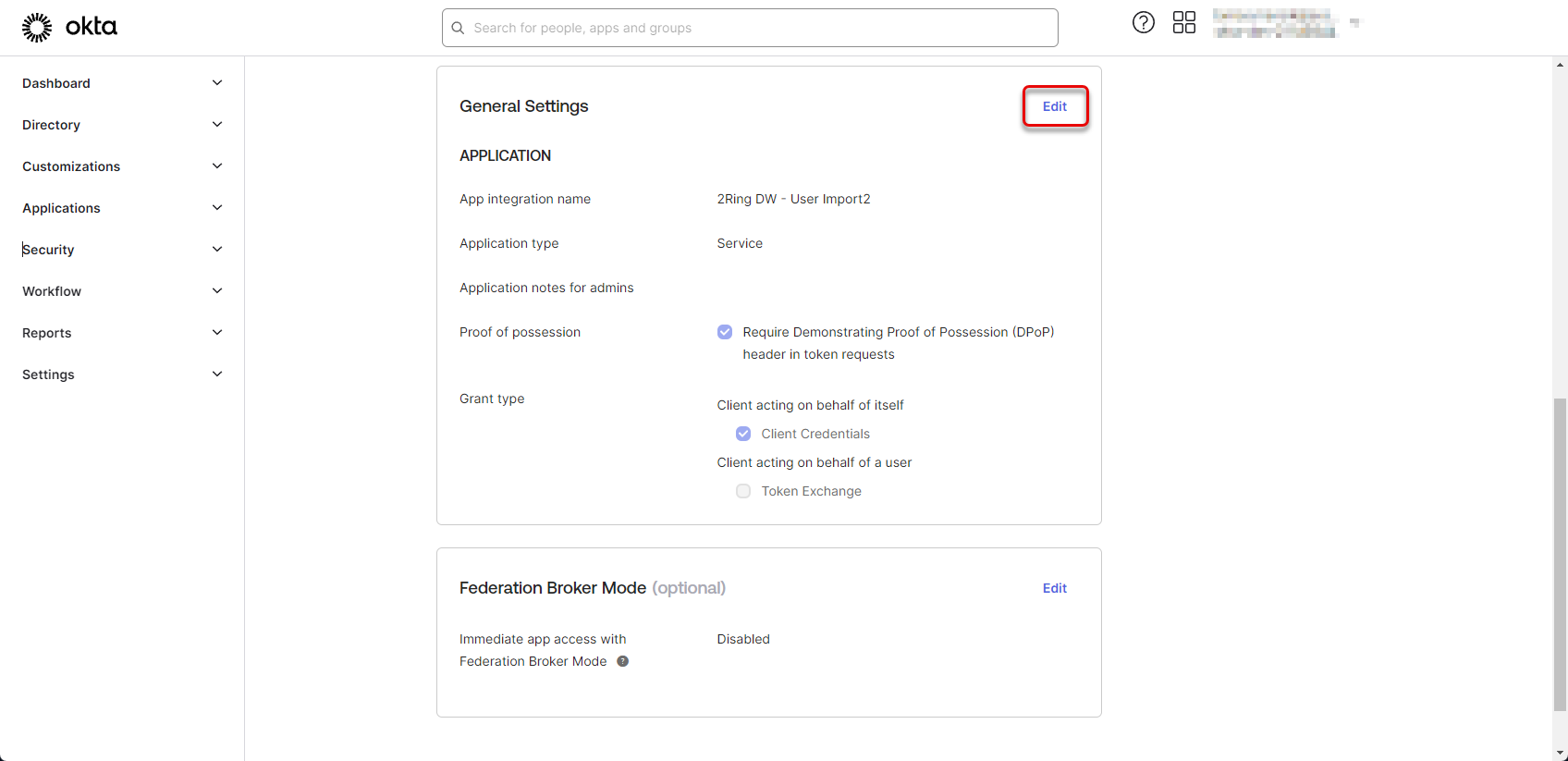
Only one key can be configured for the application. In case you need to rotate the key, you need to generate a new key and then retire the old one. In the app details, in the General Settings section, click “Edit”
Figure 29: Configure Okta application 8
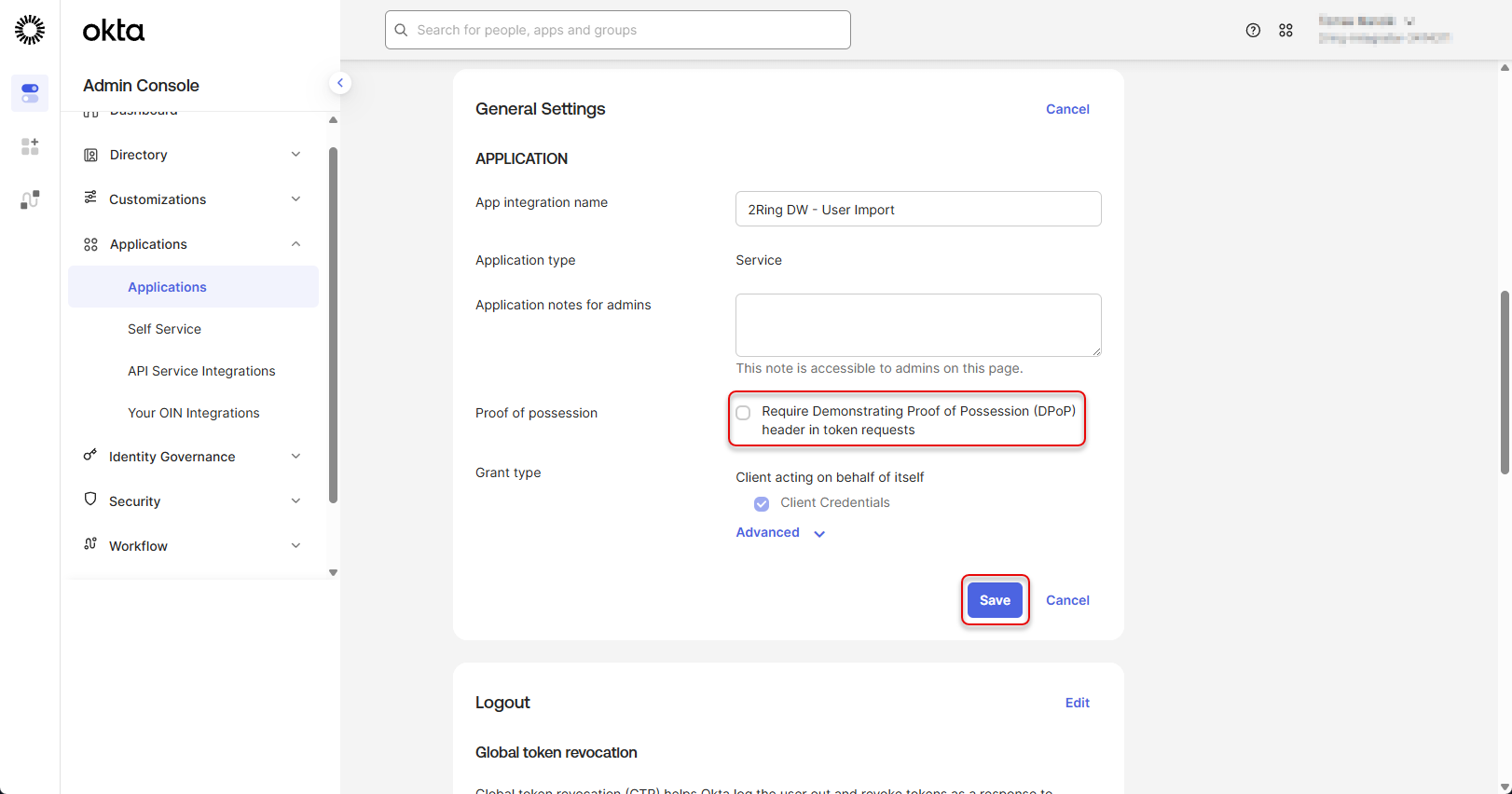
Uncheck “Require Demonstrating Proof of Possession (DPop) header in token requests” and click Save
Figure 30: Configure Okta application 9
In the application detail, switch to the “Okta API Scopes” tab
Figure 31: Configure Okta application 10
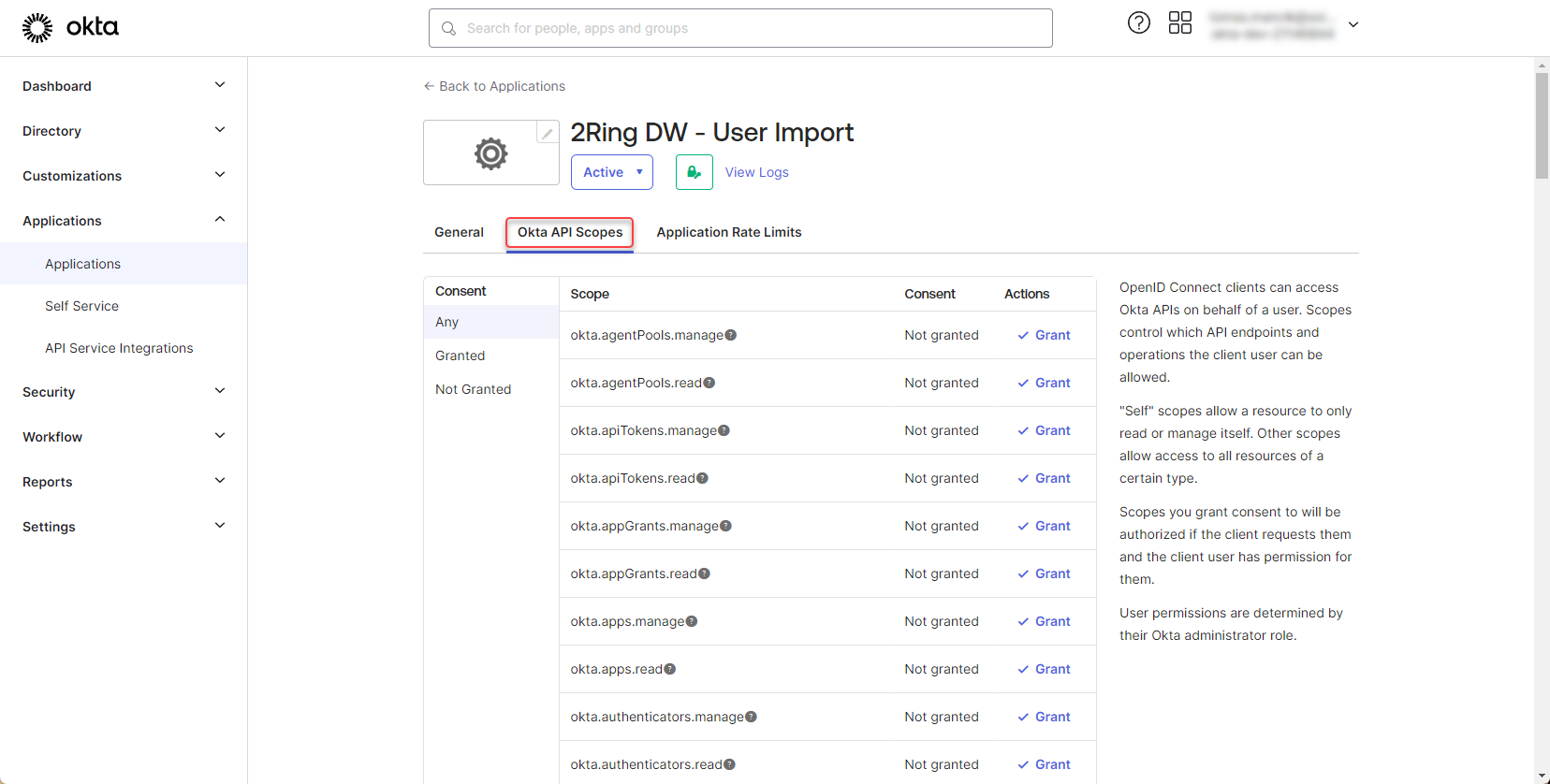
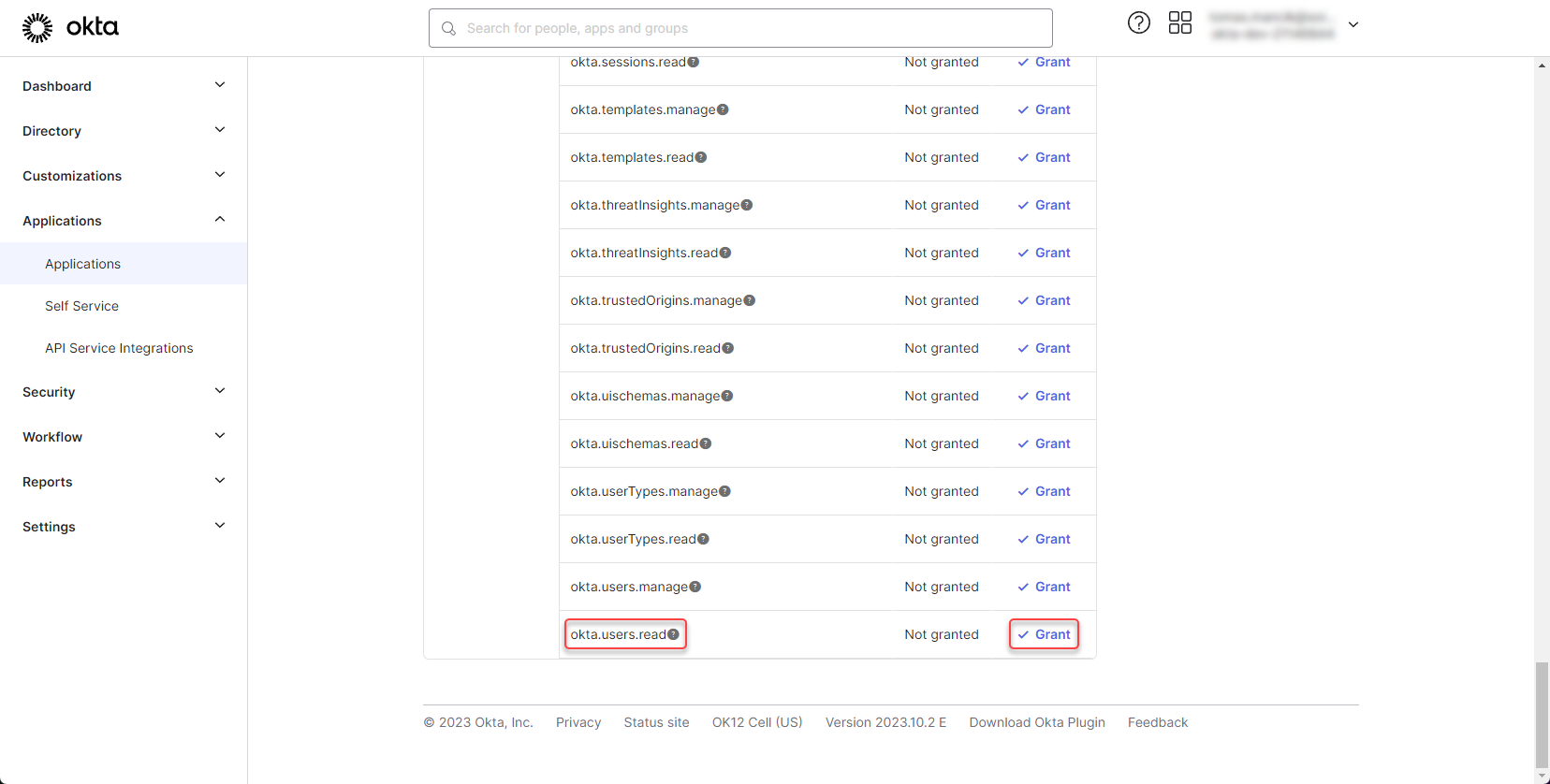
Scroll down and grant the “okta.users.read” permission.
Figure 32: Configure Okta application 11
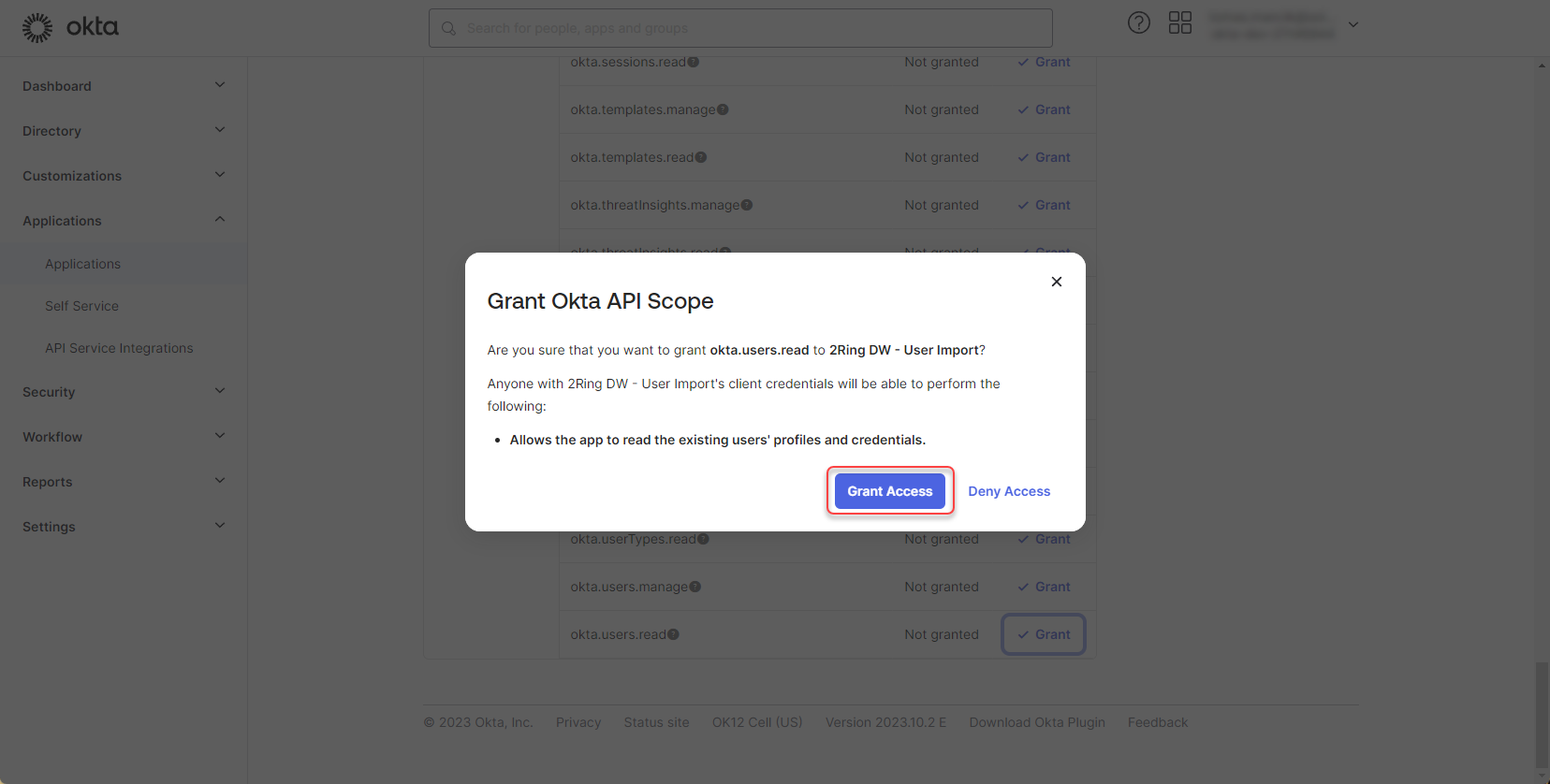
Confirm that you want to grant this permission to created application.
Figure 33: Configure Okta application 12
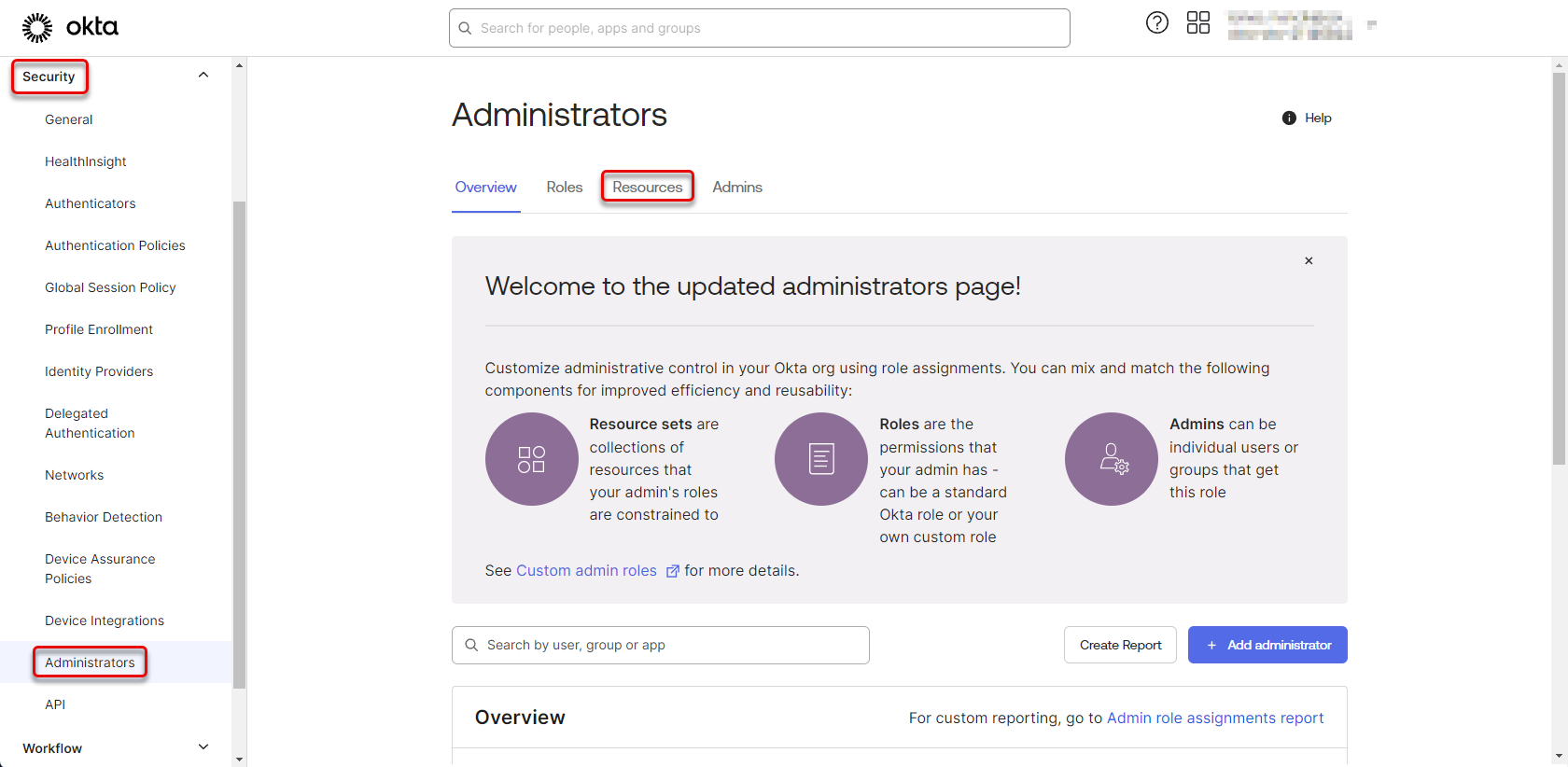
Navigate to “Security” -> “Administrators” and switch to the “Resources” tab.
Figure 34: Configure Okta application 13
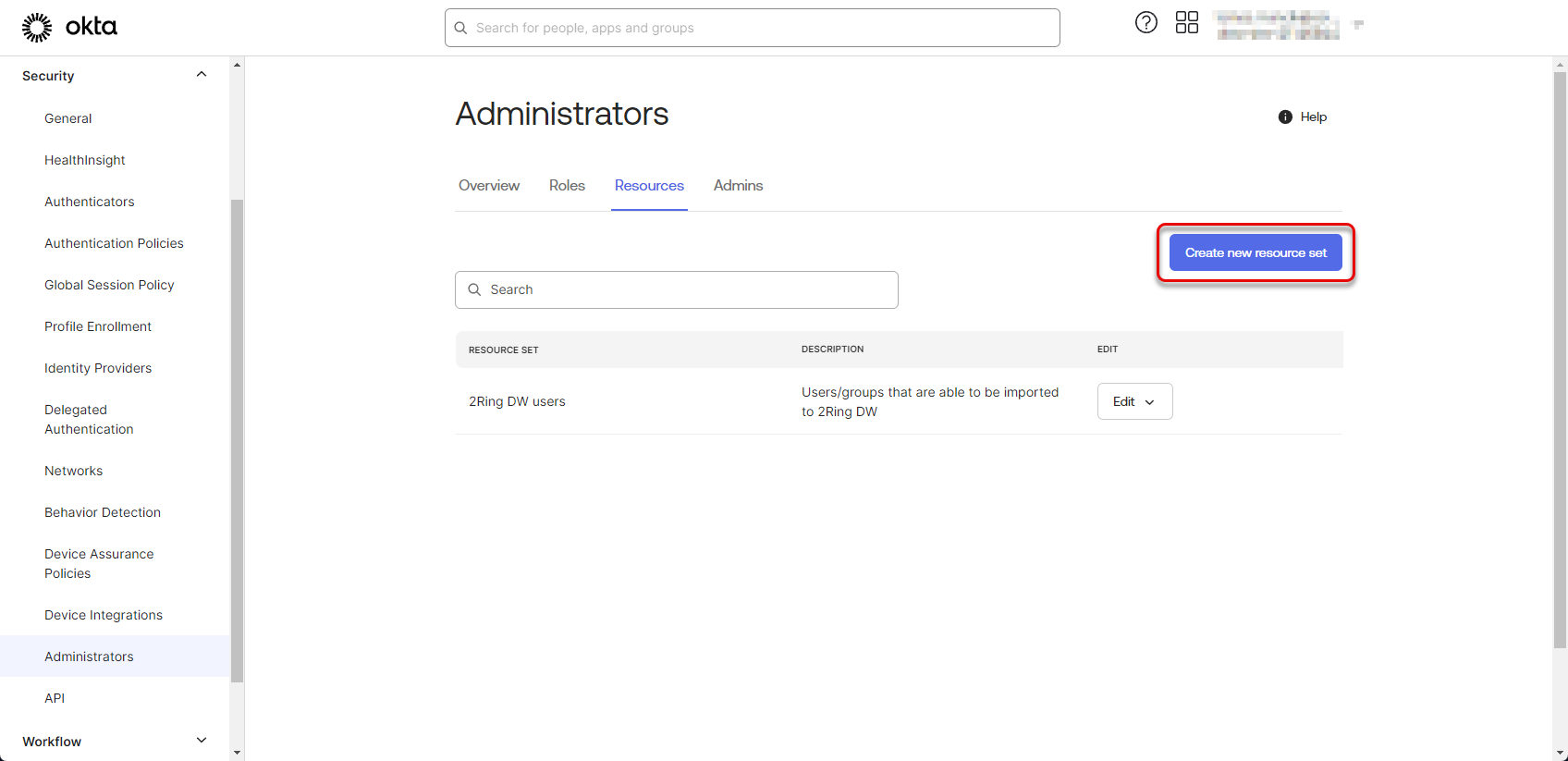
Click on “Create new resource set” button.
Figure 35: Configure Okta application 14
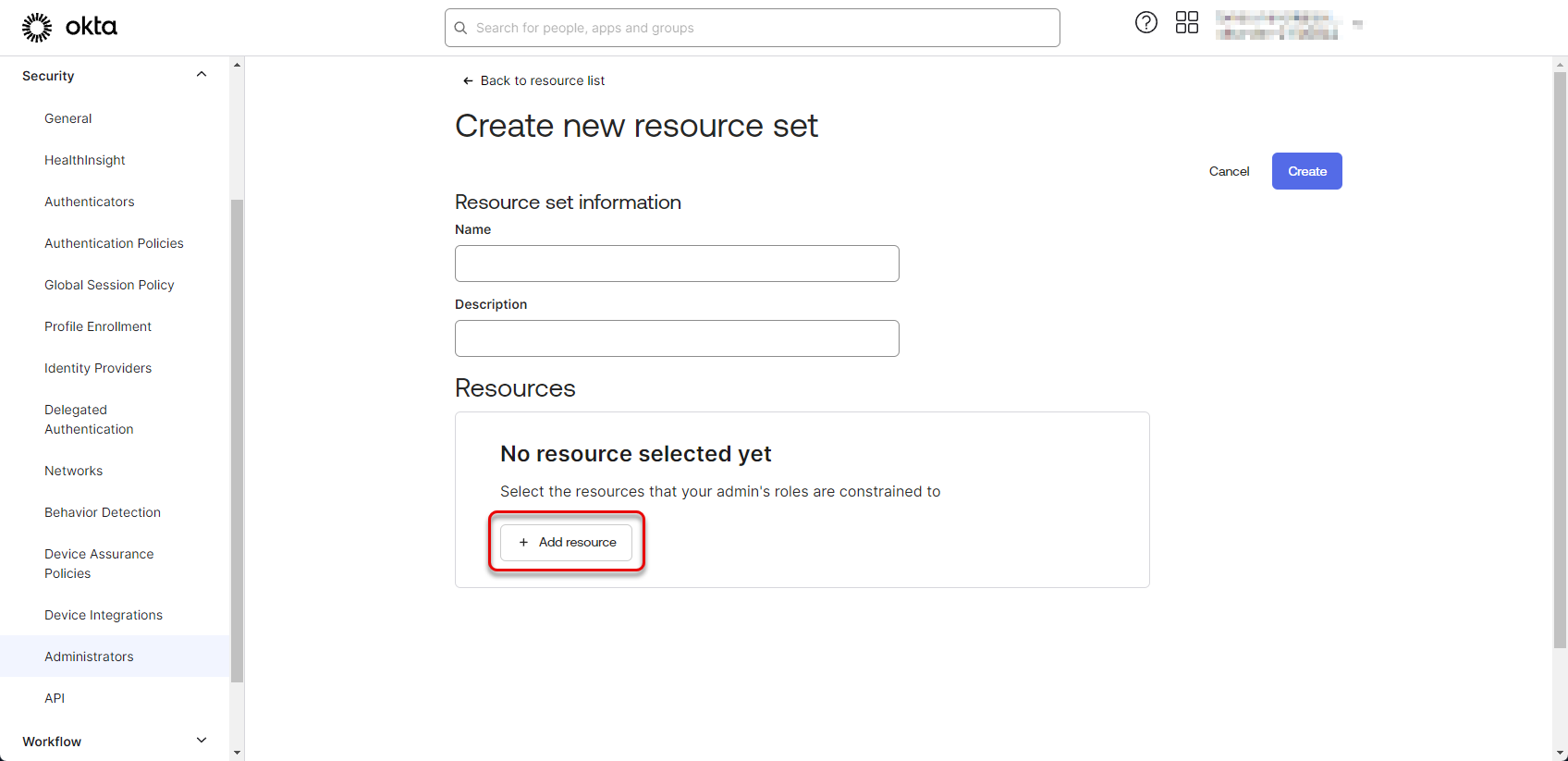
Click on “Add resources” button.
Figure 36: Configure Okta application 15
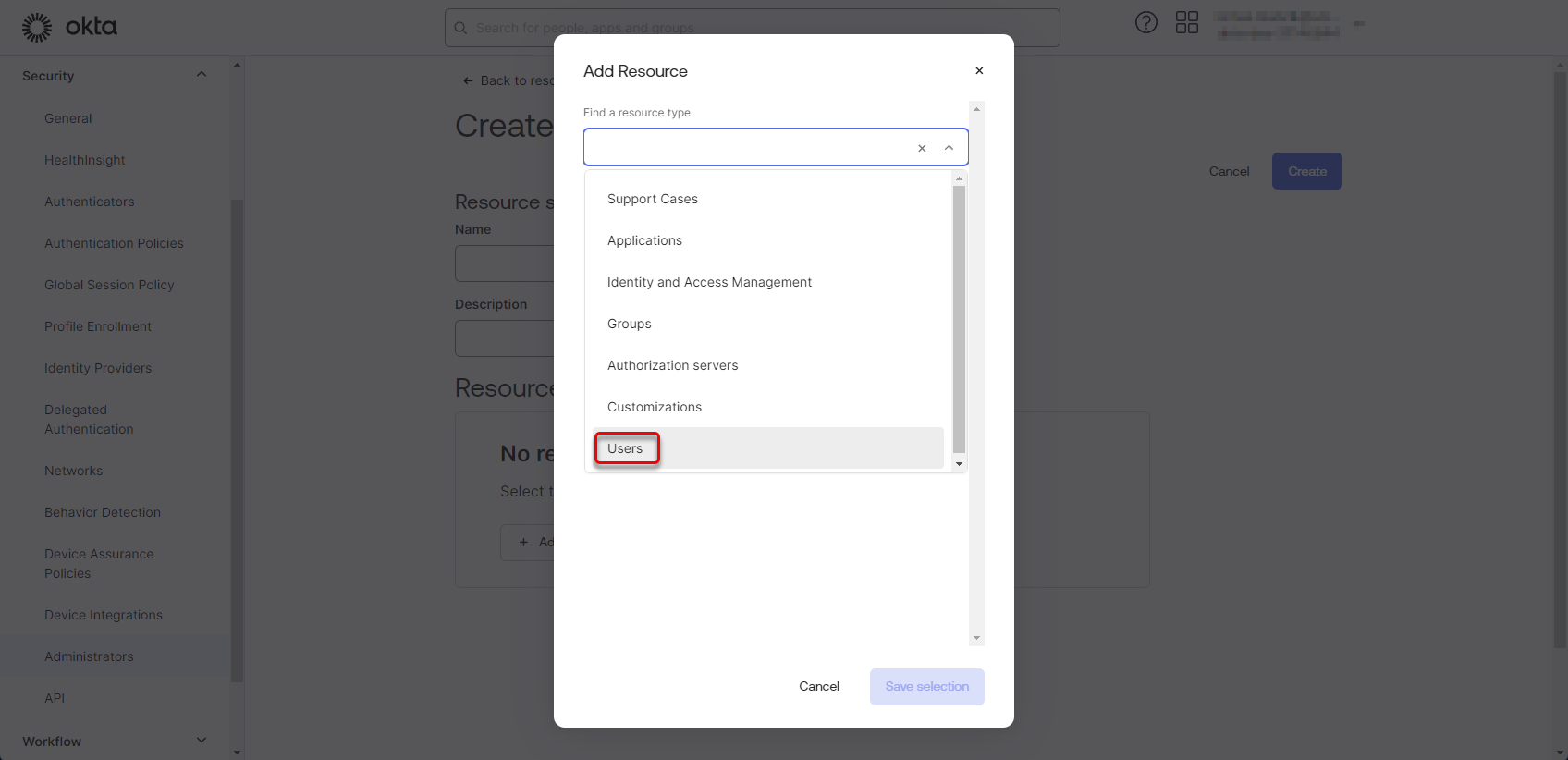
Select the “Users” resource type.
Figure 37: Configure Okta application 16
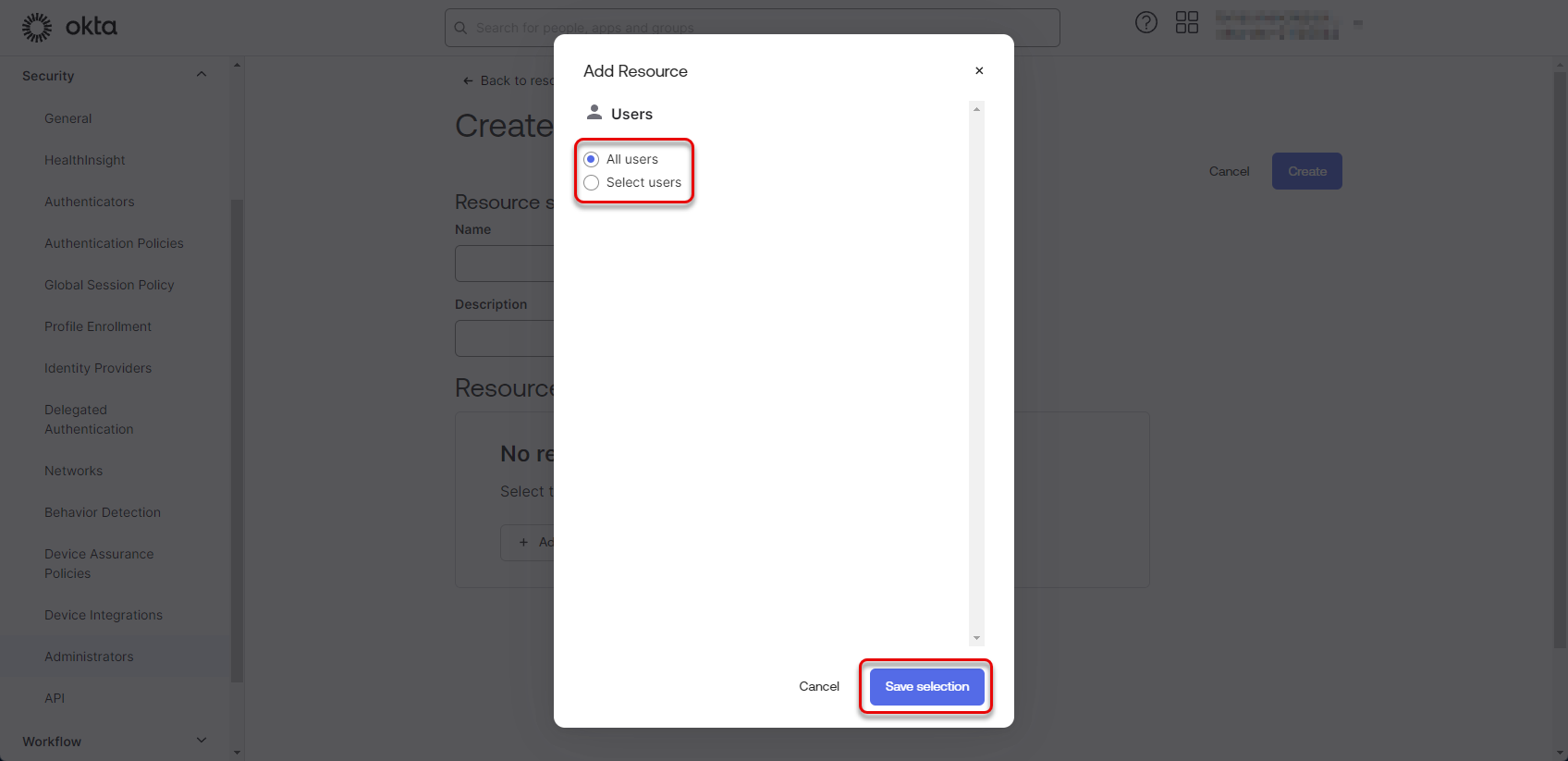
Choose whether All users or specific group of users should be able to be imported into the DW application and click “Save selection”.
For more information see Creating groups of users section.
Figure 38: Configure Okta application 17
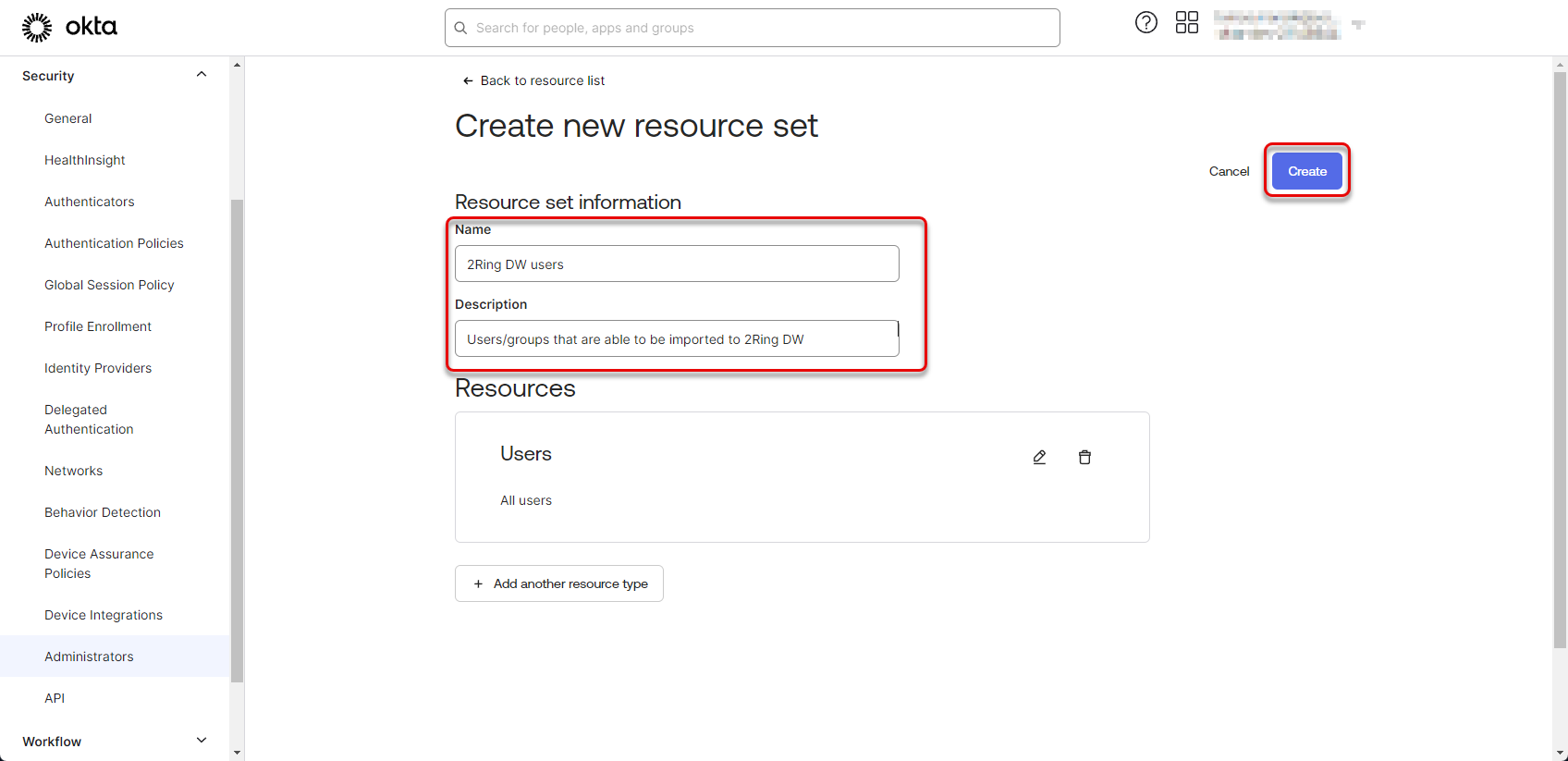
Fill the “Name” and “Description” fields and click “Create”.
Figure 39: Configure Okta application 18
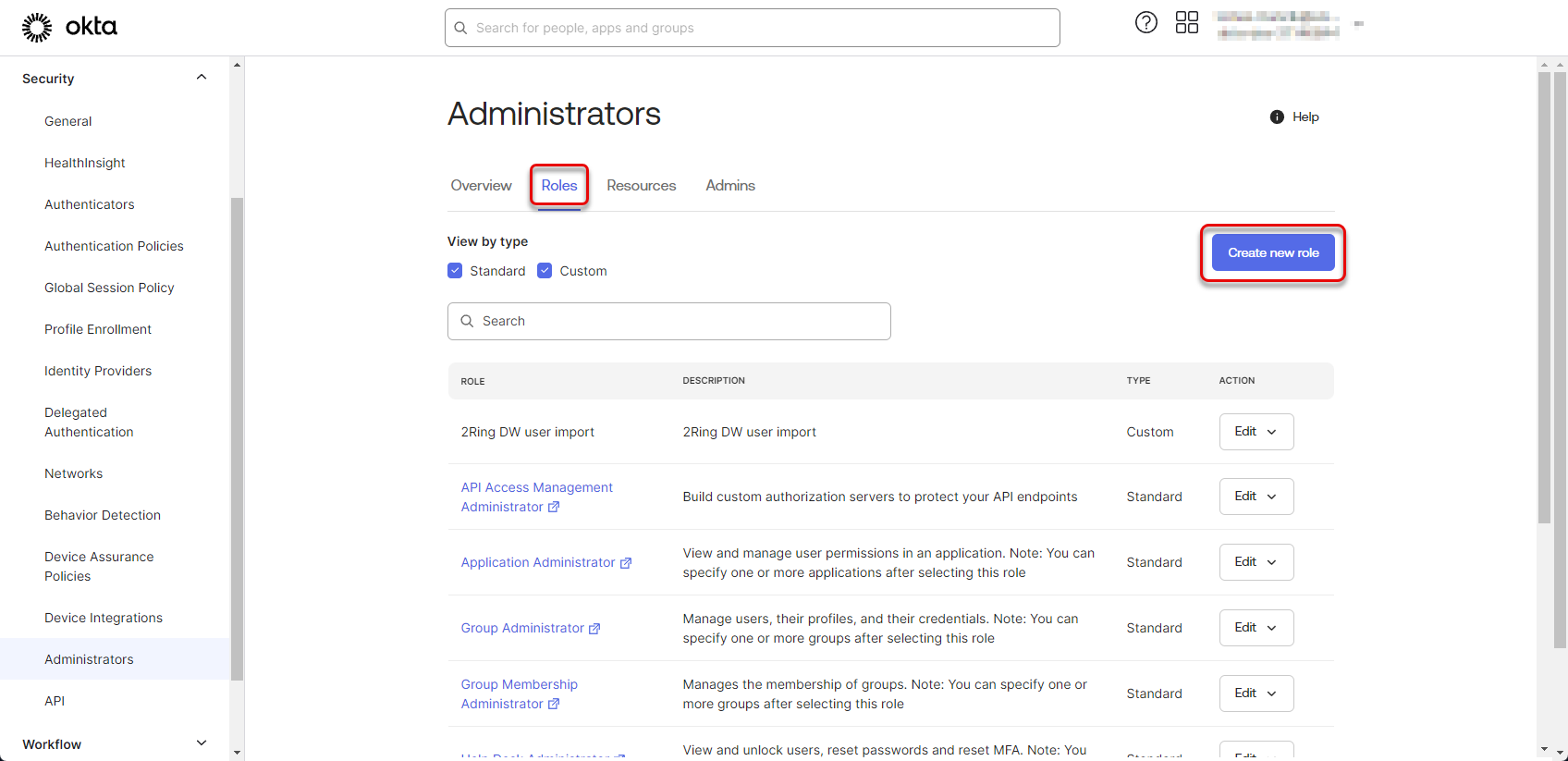
Switch to the Roles tab and click “Create new role” button.
Figure 40: Configure Okta application 19
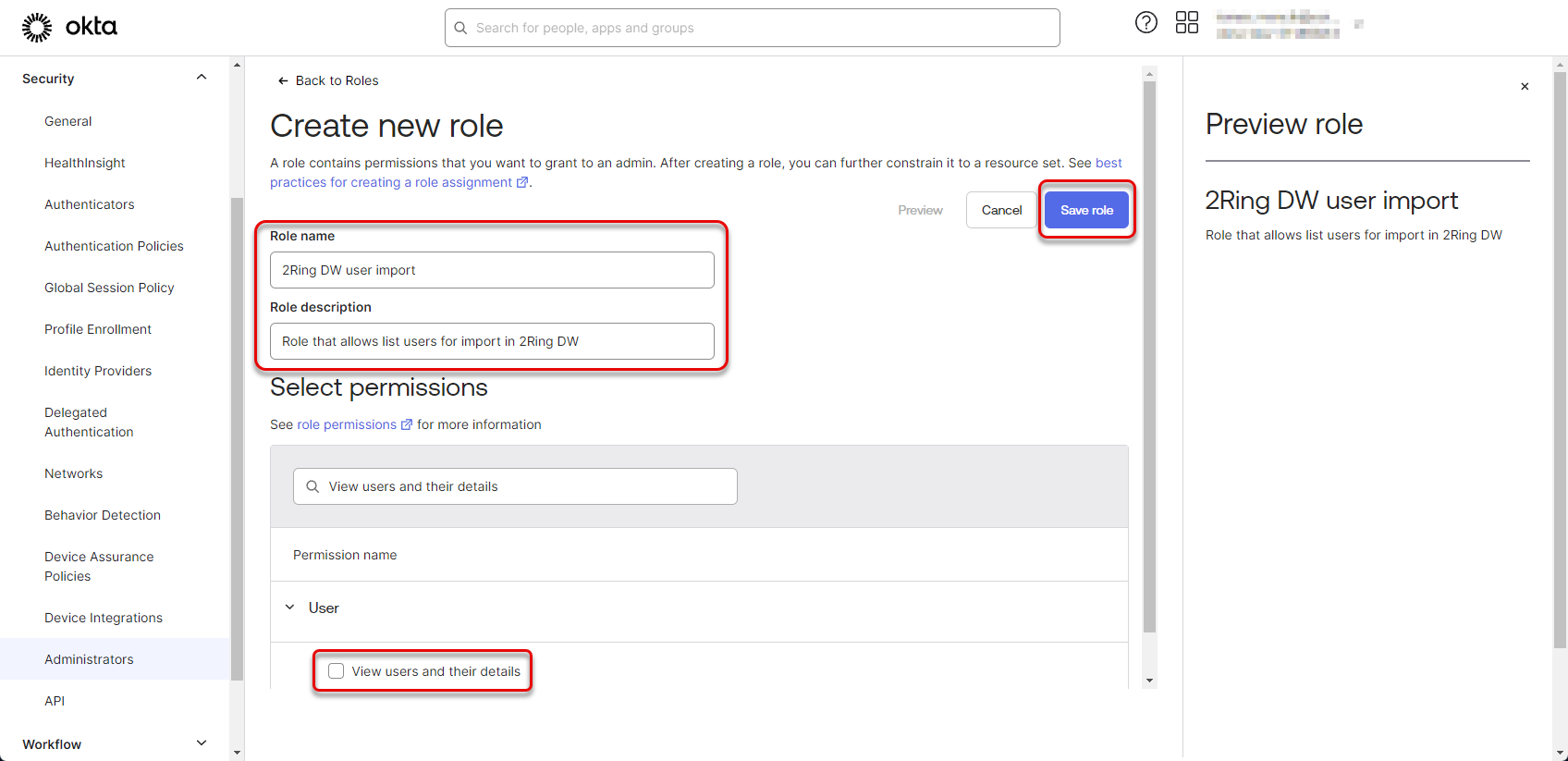
Fill the “Name” and “Description” fields, search for the “View users and their details” permission, check the checkbox and click “Save role” button.
In case of using groups of users, the “View groups and their details” permission is also needed to be assigned to the role.
Figure 41: Configure Okta application 20
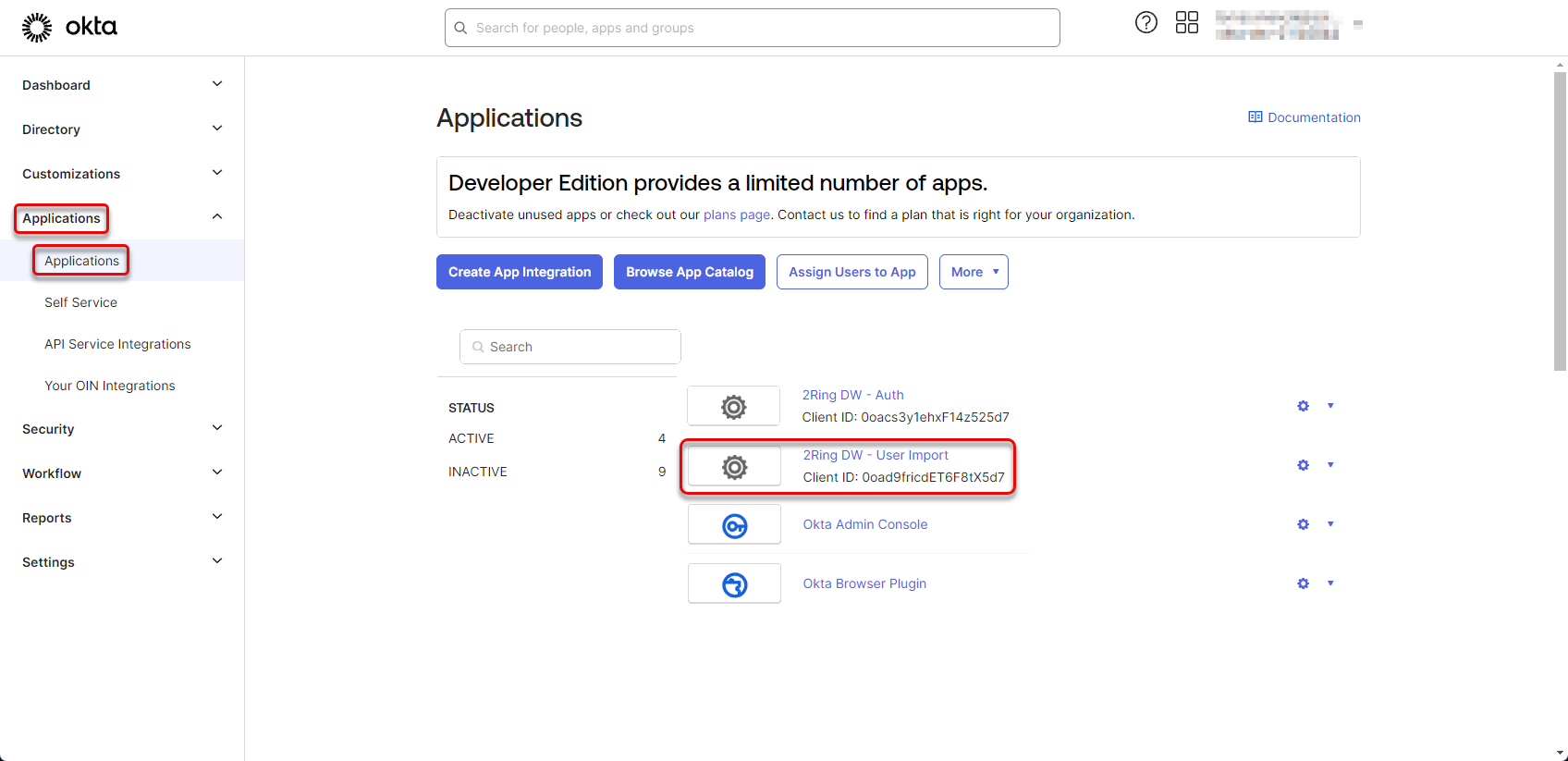
Navigate back to the “Applications” -> “Applications” and click on the “2Ring DW - User Import” application.
Figure 42: Configure Okta application 21
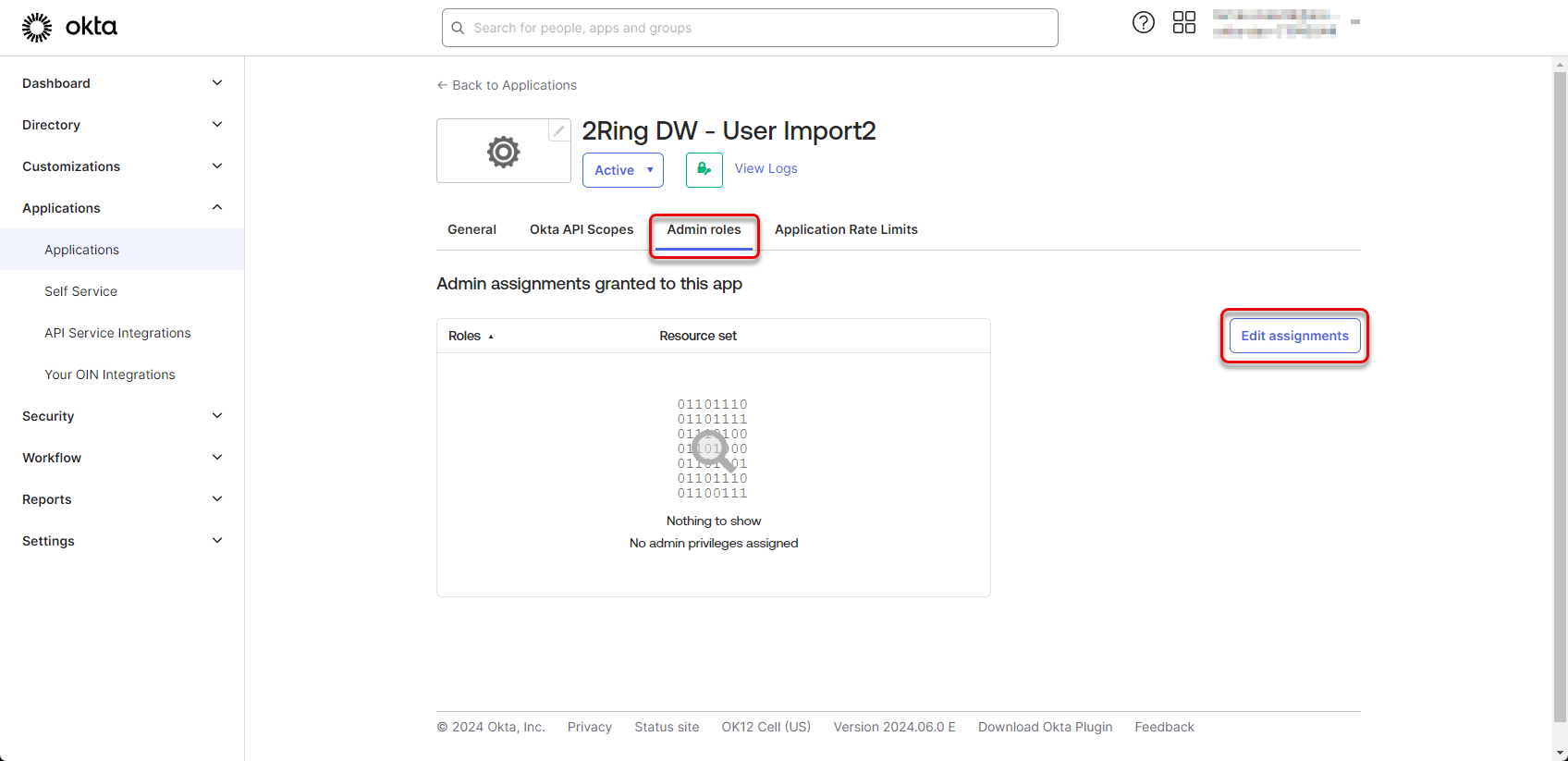
Switch to the “Admin Roles” tab and click the “Edit assignments” button.
Figure 43: Configure Okta application 22
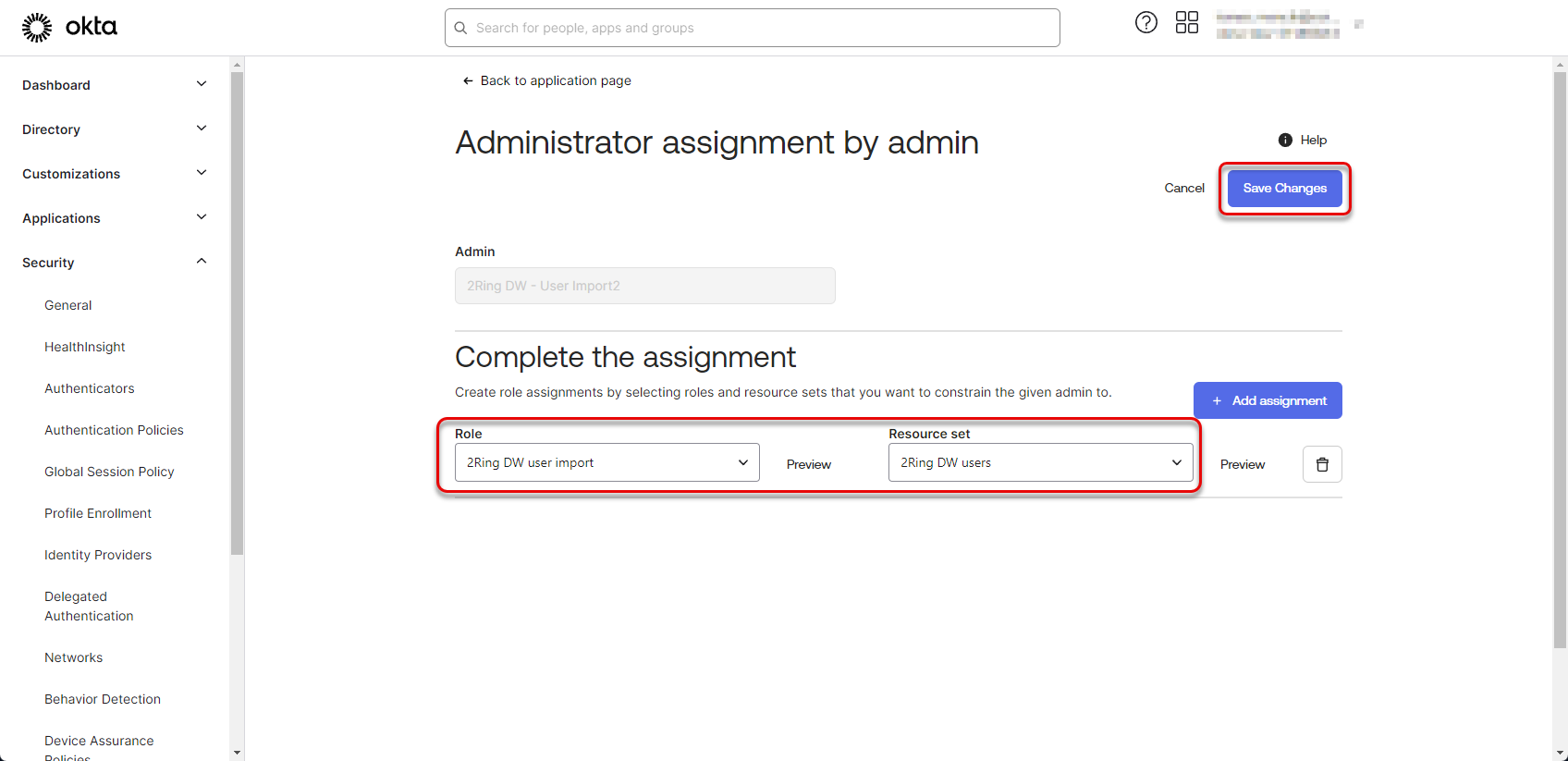
Create new role assignment by selecting the newly created “Role” and “Resource set” and click “Save Changes”.
Figure 44: Configure Okta application 23
Creating groups of users
Groups of users that can be later selected as users able to be imported in the DW application can be configured in the Okta application. To create a group of users, follow these steps:
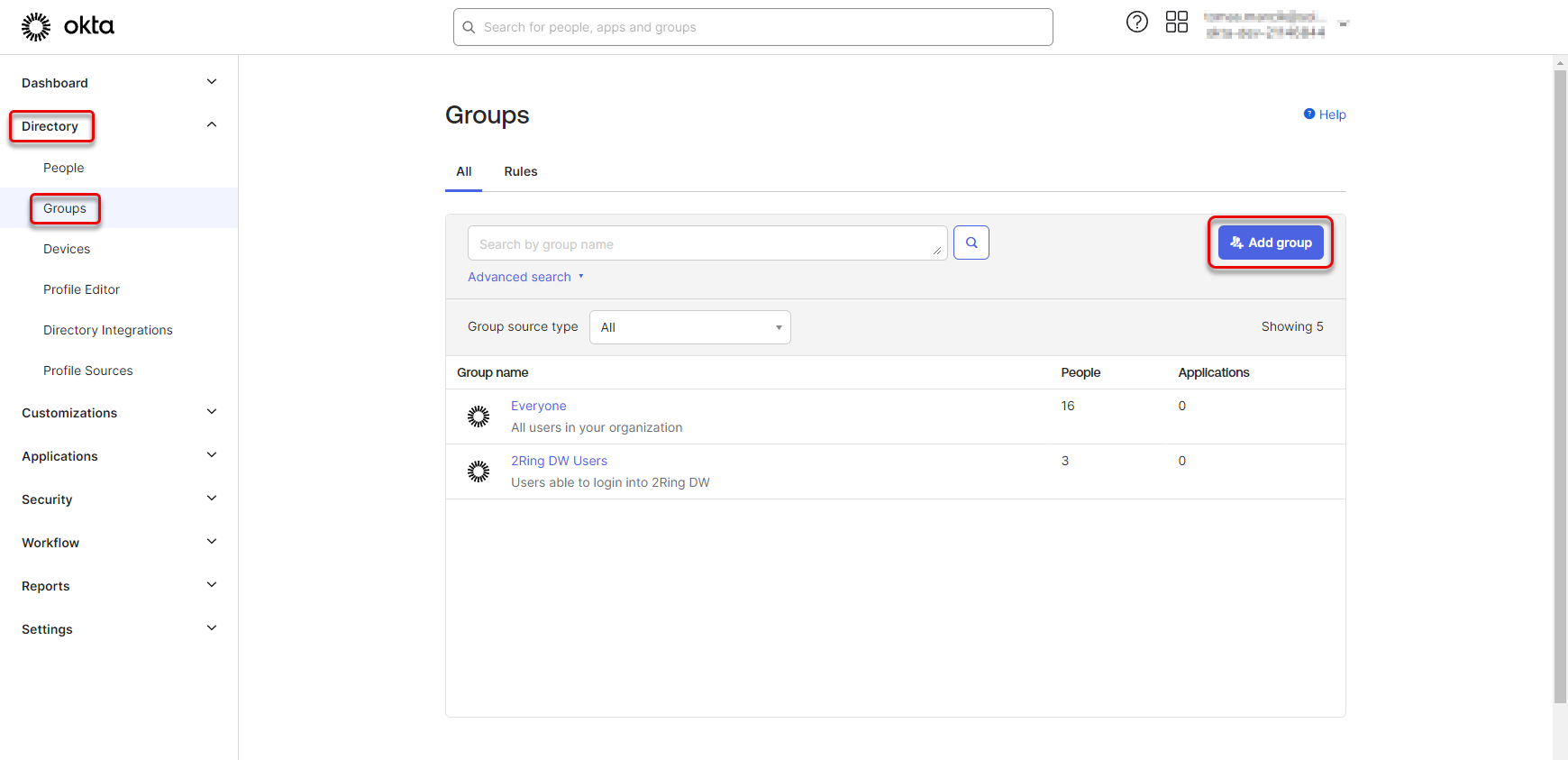
Navigate to “Directory” -> “Groups” and click the “Add Group” button.
Figure 45: Create group of users
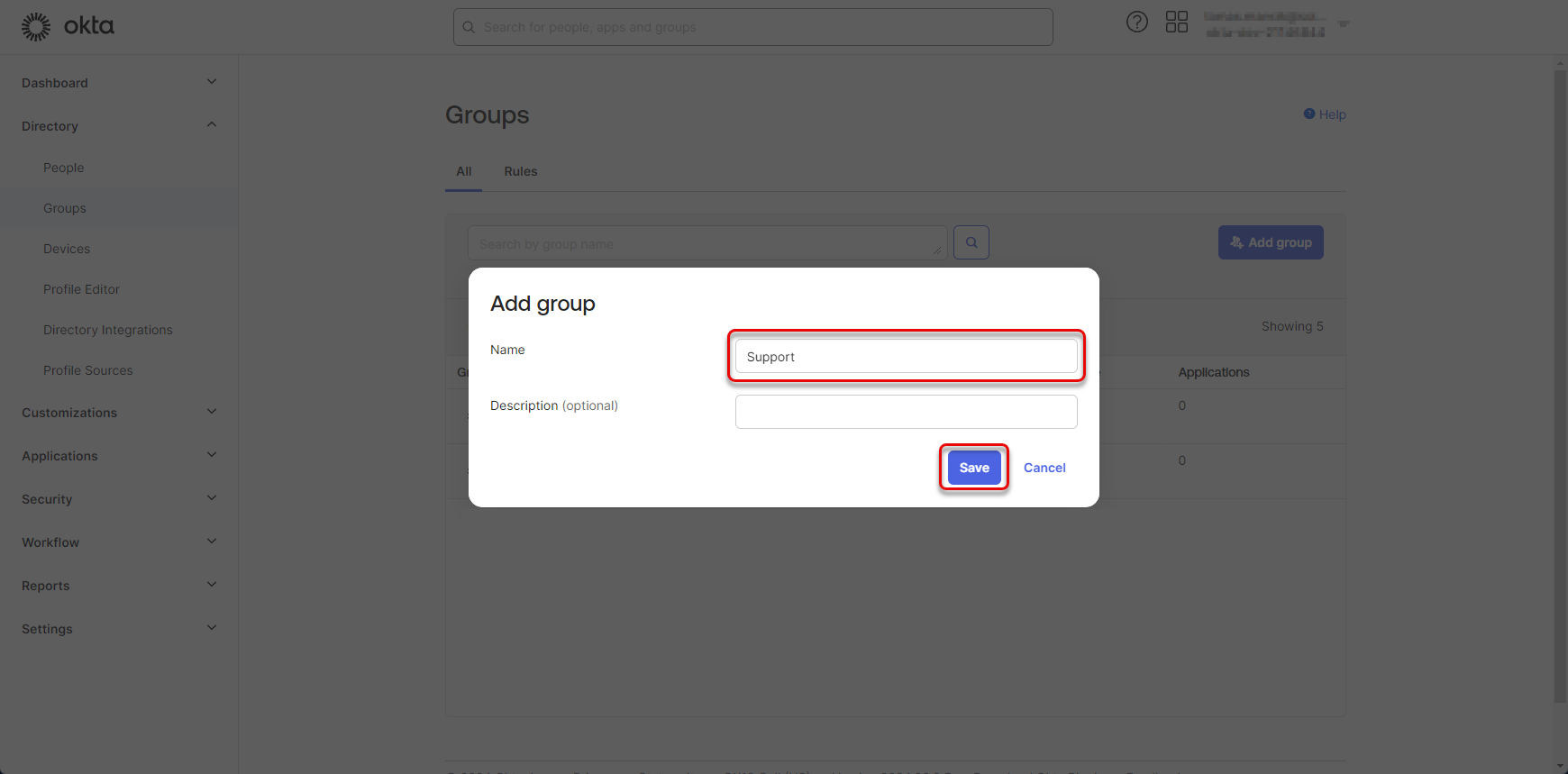
Fill the name of the group and click “Save”.
Figure 46: Create group of users 2
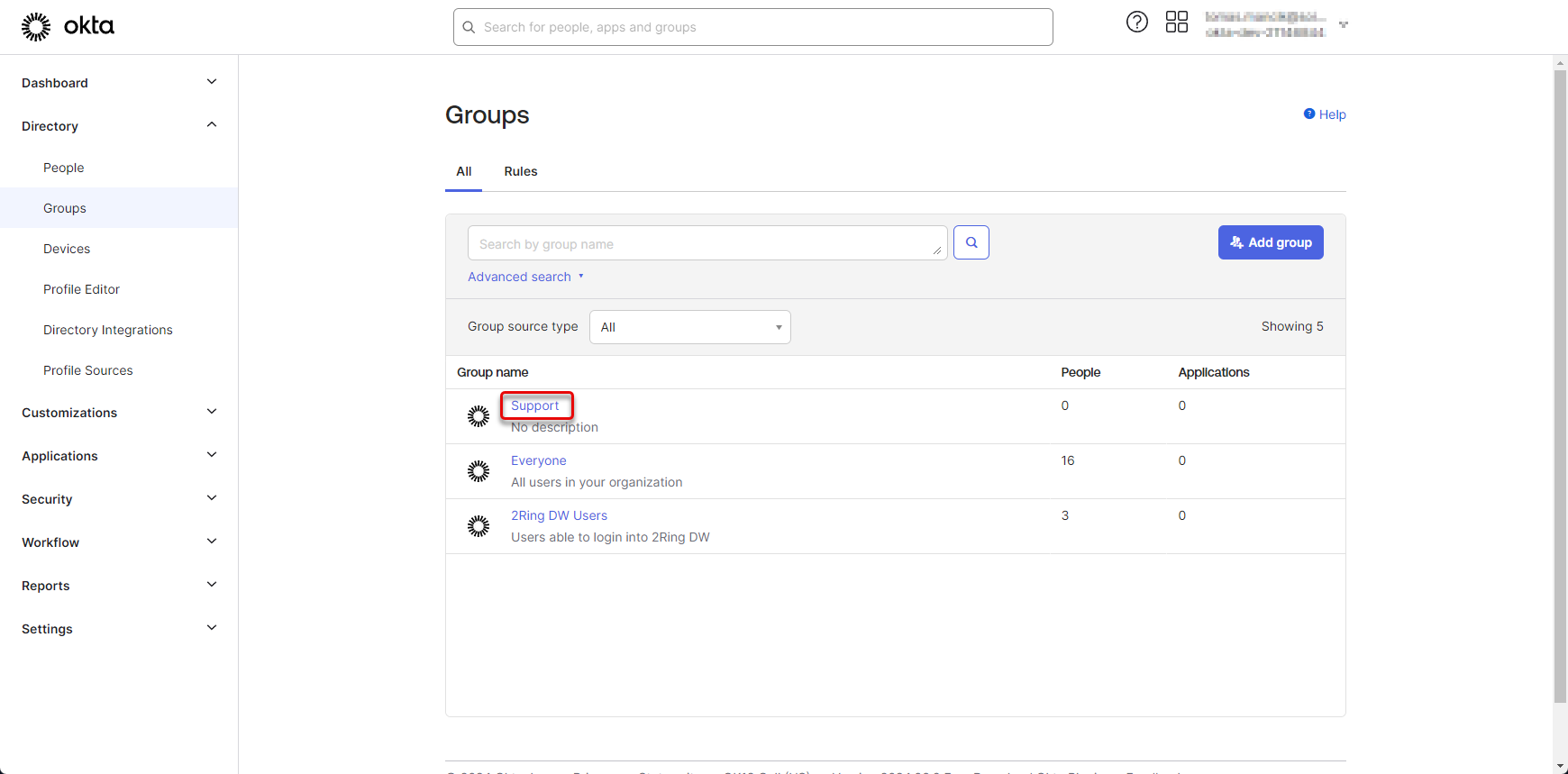
Click on the newly created group of users.
If you don’t see the created group in the list, refresh the page. Figure 47: Create group of users 3
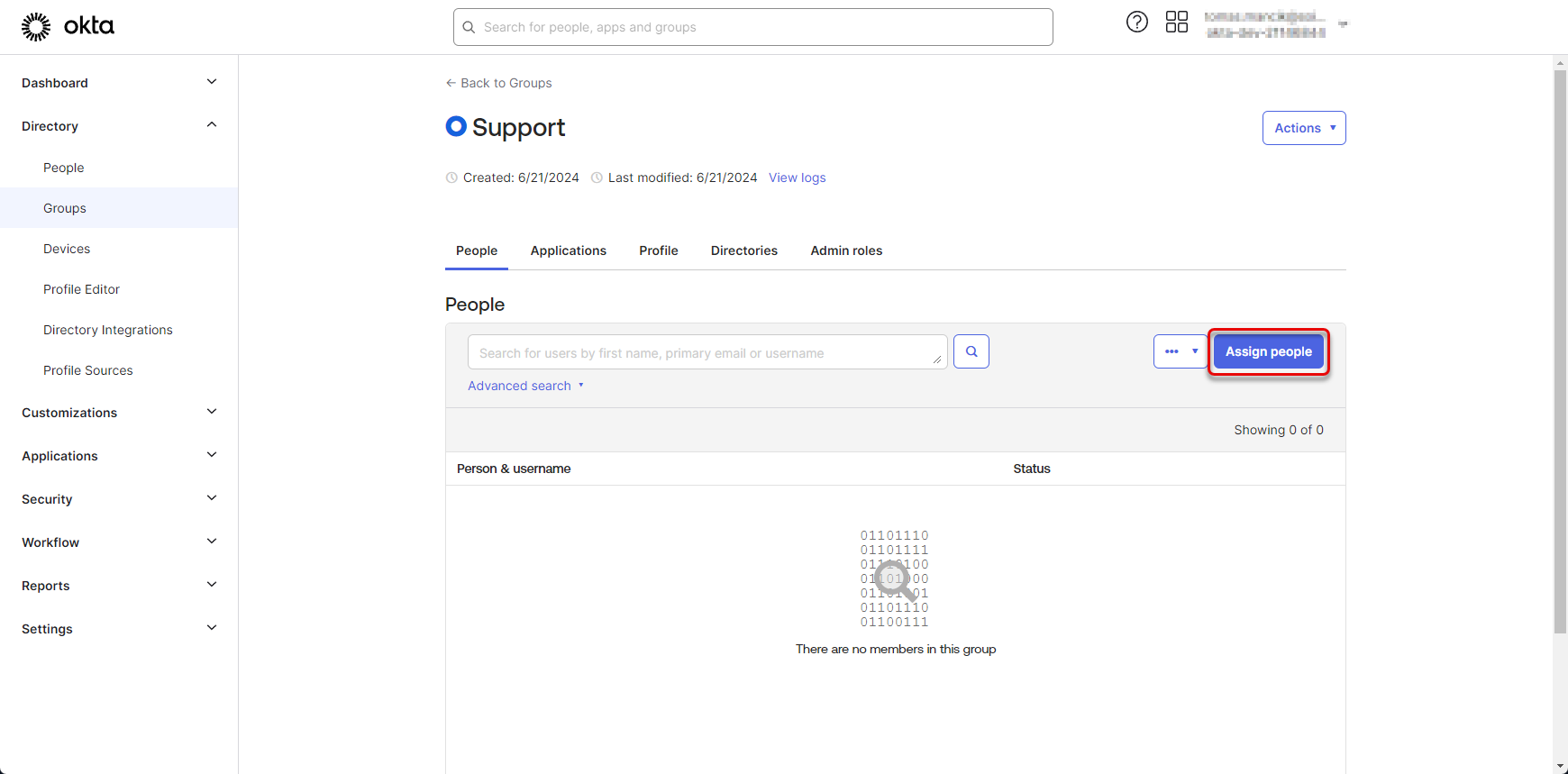
Click on the “Assign people” button.
Figure 48: Create group of users 4
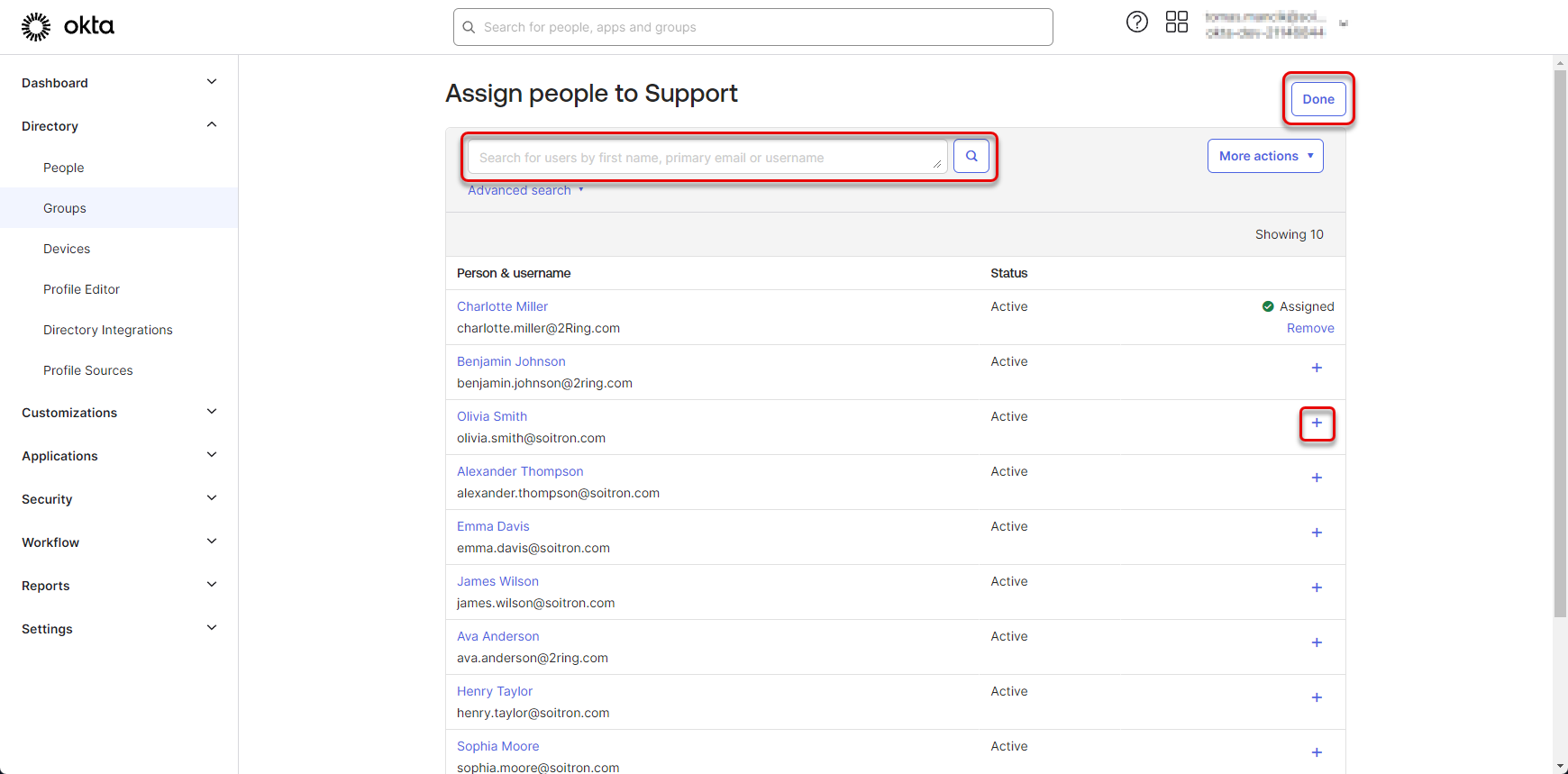
Search for the users that should be assigned to the group and click the button. Once you have all users assigned, click “Done” button. The group of users is created.
Figure 49: Create group of users 5
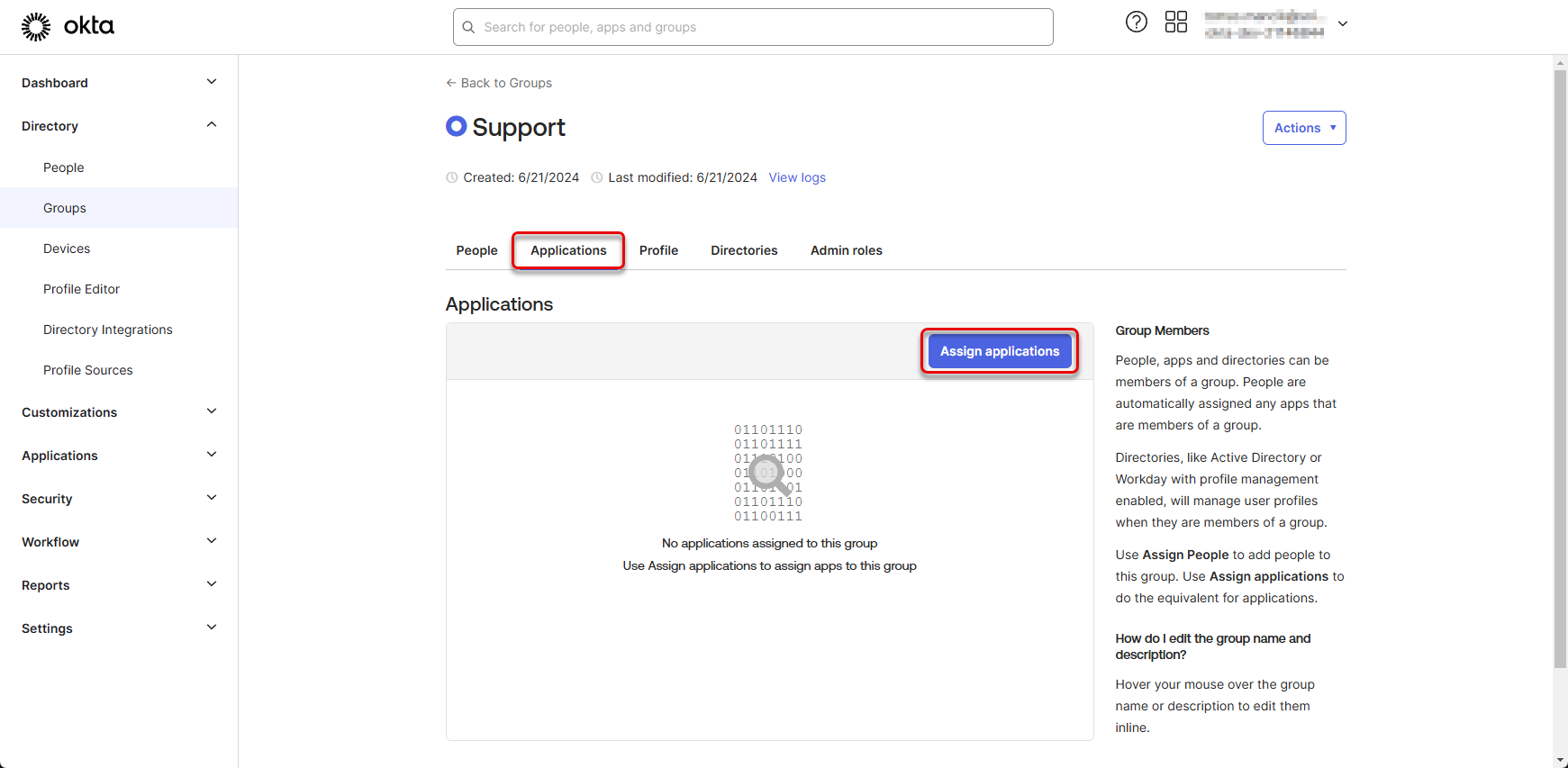
Navigate back to “Directory” -> “Groups” and switch to the “Applications” tab. Click the “Assign applications” button.
Figure 50: Create group of users 6
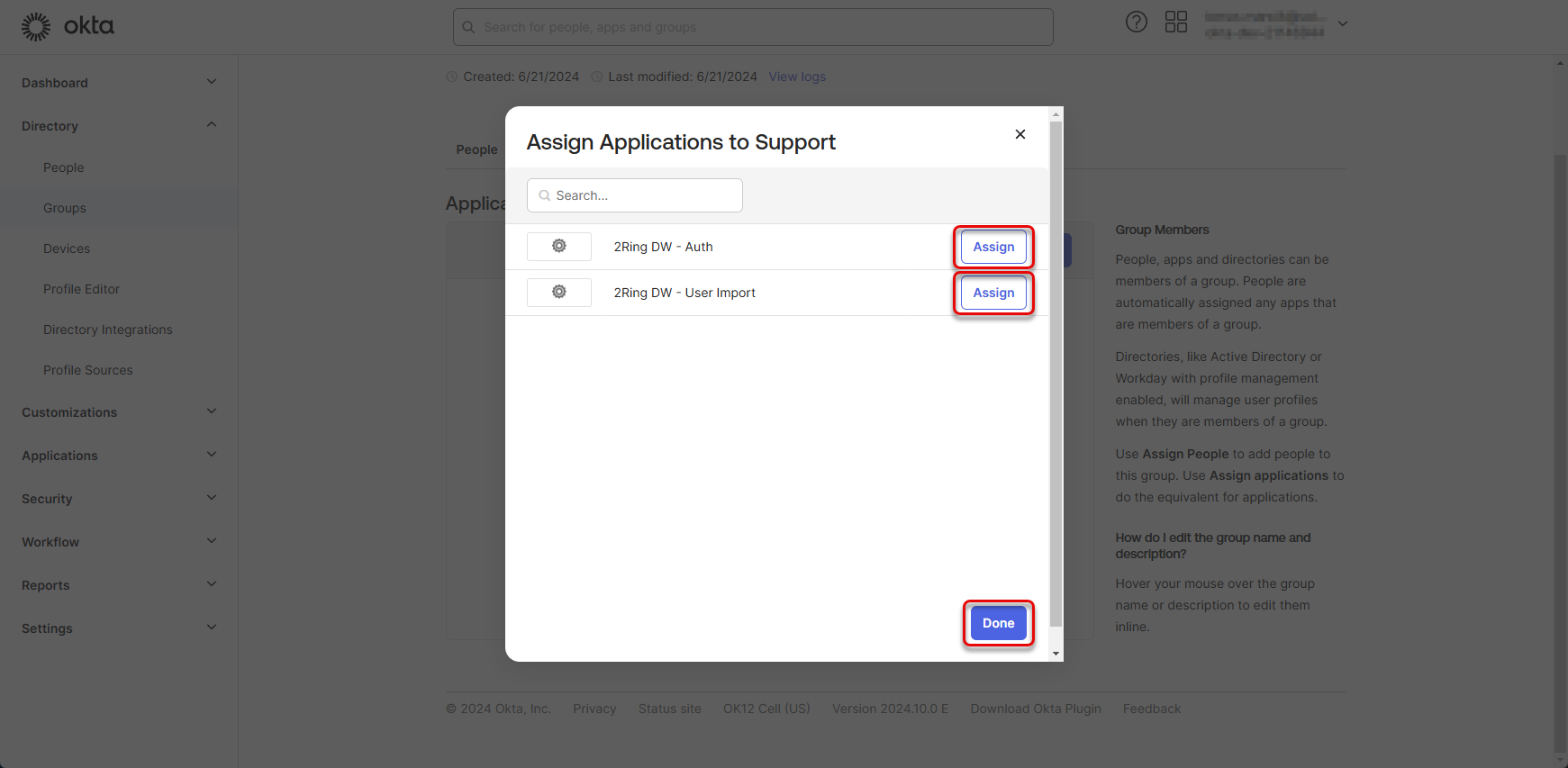
Assign both created applications to the group of users and click “Done”.
Figure 51: Create group of users 7
Afterwards contact 2Ring support and provide domain, client id and PEM private key.